

This guide is part of AIMS Industrial's curated Engineering Reference Charts library — 78 reference articles across fasteners, threading, bearings, lubrication and safety standards.
What Is Cutting Fluid and Why Does It Matter?
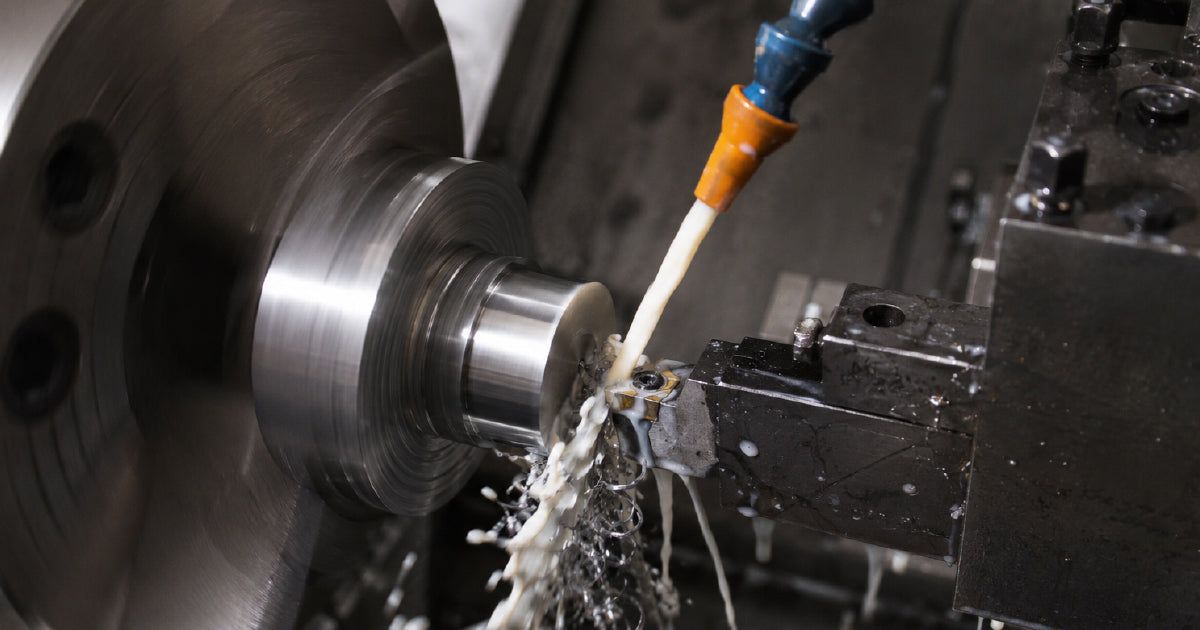
Cutting fluid is any liquid applied at the cutting zone during machining, drilling, tapping, milling, or sawing operations. It serves two distinct functions that are impossible to separate in practice: lubrication and heat removal.
When a drill bit or cutting tool removes material, it generates heat through friction and the deformation of the workpiece material. That heat does several things — it softens the cutting edge, accelerates tool wear, causes the workpiece to expand (affecting dimensional accuracy), and can cause built-up edge (BUE) on the tool, where workpiece material welds to the cutting edge and dramatically increases cutting forces. Cutting fluid attacks all of these problems simultaneously.
Beyond cooling and lubrication, cutting fluids also flush away chips and swarf from the cutting zone. Chips left in a drill hole or milling slot act as an abrasive — recutting the swarf accelerates tool wear and can cause the tool to bind or break. A flood of cutting fluid carries chips out of the cut.
The practical result of using the right cutting fluid: tools last longer, surface finish improves, dimensional accuracy is easier to maintain, and taps are significantly less likely to break. For AIMS customers regularly drilling, tapping, and machining steel, aluminium, and stainless, cutting fluid is not optional — it is a standard part of the operation.
Types of Cutting Fluid: An Overview
Cutting fluids fall into four broad categories. Understanding the differences helps you select the correct product for each operation and material, rather than defaulting to whatever is on the shelf.
Neat Cutting Oil
Neat cutting oil is an undiluted petroleum or mineral oil, sometimes with extreme-pressure (EP) additives such as sulphur, chlorine, or phosphorus compounds. It is used straight from the container — it is not diluted with water. Neat oils provide excellent lubrication and are particularly suited to heavy-duty operations such as gear hobbing, broaching, threading, and operations on difficult-to-machine materials like stainless steel and high-temperature alloys.
The trade-off: neat oils have poor cooling ability compared to water-based fluids. They are also more expensive per litre, produce smoke at elevated temperatures, and require care around fire risk in high-speed operations. For low-speed, high-load operations where lubrication is paramount, neat oil is the right choice.
Note — Important for aluminium: Some neat cutting oils contain active sulphur additives. Active sulphur reacts with aluminium and copper alloys, causing staining and surface discolouration. Always check that a neat cutting oil is rated for non-ferrous use before applying it to aluminium, brass, or copper. Many sulphur-based oils are explicitly marked "for ferrous metals only."
Soluble (Water-Miscible) Cutting Oil
Soluble cutting oil, also called soluble oil or emulsifiable oil, is a concentrate that is mixed with water before use. When mixed, the oil forms a stable emulsion — a milky-white fluid containing oil droplets suspended in water. The water phase provides cooling; the oil phase provides lubrication.
Soluble oils are the most widely used cutting fluids in general machining and are the standard choice for most workshop operations: drilling, milling, turning, and grinding. They are economical (a 20-litre concentrate produces hundreds of litres of working fluid), easy to use, and provide a good balance of cooling and lubrication for the majority of engineering materials.
Common AU examples: Penrite Soluble Oil, Fuchs XDP 1800, Castrol Hysol. These products are all emulsifiable concentrates and work on the same principle.
Semi-Synthetic Cutting Fluid
Semi-synthetics are a hybrid — a water-dilutable concentrate containing both oil and synthetic chemical lubricants. They produce a translucent or clear fluid rather than the milky emulsion of a soluble oil. Semi-synthetics offer improved biological stability (they resist bacterial growth longer than soluble oils), better cooling, and improved visibility of the cutting zone. They are the preferred choice in many CNC machining centres for these reasons. Semi-synthetics do cost more than basic soluble oils.
Synthetic Cutting Fluid
True synthetics contain no petroleum oil — they are entirely water-based solutions of chemical compounds (amines, glycols, corrosion inhibitors, biocides). They offer the best cooling performance, excellent corrosion protection, and the longest sump life of any cutting fluid type. Synthetics are used in high-speed grinding and some CNC operations. They provide no oil-film lubrication, which limits their use for tapping and threading where high lubrication is needed.
Paste and Gel Cutting Compounds
Cutting pastes (such as Trefolex CT) are dense, waxy compounds applied directly to taps, dies, and drill bits before the cut. They are not flood coolants — they provide concentrated lubrication at the cutting edge without dripping. Cutting paste is the standard choice for manual tapping, hand die cutting, and hole sawing operations where applying liquid coolant is impractical. Trefolex is the most widely recognised brand in Australia for this application.
Cutting Fluid Selection by Material
Matching the fluid to the workpiece material is as important as matching it to the operation. The following guide covers the most common materials encountered in Australian workshops and field applications.
Mild Steel and Carbon Steel
General purpose soluble cutting oil (mixed per the manufacturer's concentration recommendation, typically 1:20 to 1:30) is the correct fluid for most steel drilling, milling, and turning. For heavy-duty operations — deep-hole drilling, form tapping, gear cutting — use neat cutting oil with EP additives. Cutting paste is appropriate for manual tapping in steel.
Stainless Steel
Stainless steel is one of the most demanding materials for cutting fluids. It work-hardens rapidly, meaning a blunt tool or poor lubrication causes the surface to harden ahead of the cutting edge — the tool then struggles to cut the hardened layer and may break or rub without cutting. Use a neat cutting oil or EP-rated soluble oil specifically formulated for stainless, applied generously. Slow speeds and high feed rates also help prevent work-hardening. Do not use ordinary domestic cutting oil on stainless — use an EP-rated product.
Aluminium and Aluminium Alloys
Aluminium machining has two specific challenges. First, aluminium is soft and sticky — it tends to build up on cutting edges (BUE), causing poor surface finish and tool loading. Second, sulphur-based cutting oils stain aluminium. For aluminium, use:
- A dedicated aluminium cutting fluid (many are kerosene-based or use synthetic lubricity additives without active sulphur)
- Tap Magic Aluminium (purpose-formulated)
- WD-40 for light-duty or occasional use — it is acceptable for aluminium drilling and tapping in a workshop context
- Paraffin/kerosene for manual operations
Avoid sulphur-bearing neat cutting oils on aluminium — they cause brown or black staining of the machined surface.
Cast Iron
Cast iron is typically machined dry. The graphite content of cast iron acts as a self-lubricant and the cutting dust does not form a built-up edge. Using cutting fluid on cast iron creates a black slurry of cast iron dust that clogs the fluid sump and is difficult to filter. Machine cast iron dry where possible.
Copper, Brass, and Bronze
Copper alloys machine well with light mineral oil or kerosene. Avoid sulphur-bearing oils — active sulphur stains copper alloys yellow/brown. Dedicated non-ferrous cutting oils are the safest choice. WD-40 is acceptable for light operations on brass.
Titanium and High-Temperature Alloys
These materials require aggressive flood cooling — a large volume of soluble oil or semi-synthetic applied directly to the cutting zone. High-pressure coolant systems are used in CNC environments. For workshop operations, heavy EP neat oil with maximum lubrication is preferred for any tapping or threading in titanium. These materials are unforgiving — use cutting fluid without exception.
Cutting Fluid Selection by Operation
Drilling
Use soluble cutting oil (diluted) for general drilling in steel. Cutting paste or neat oil for deep-hole drilling. WD-40 is an acceptable field substitute for small-diameter holes in mild steel or aluminium when nothing else is available, but it evaporates quickly and provides minimal cooling for continuous operations.
Tapping and Threading
Tapping is the highest-risk operation for breakage, and cutting fluid is critical. Use cutting paste (Trefolex, Tap Magic) for hand tapping — apply it to the tap before each hole. For machine tapping on a CNC or tapping head, use neat cutting oil or an EP-rated soluble oil for steel; dedicated aluminium tapping fluid for aluminium. Broken taps are expensive — the right fluid is cheap insurance.
Milling
Flood coolant (soluble oil) is standard for CNC and power milling operations. For manual milling on a knee mill or bridgeport, soluble oil in a drip or mist system. For interrupted cuts in aluminium (peripheral milling), some machinists prefer cutting dry or with air blast to avoid thermal shock cracking of the carbide insert — seek advice for specific inserts.
Turning (Lathe)
Flood coolant (soluble oil) is standard on lathes. For hobby lathes without a coolant system, use cutting paste or a brush-applied neat cutting oil for each pass. Cast iron is machined dry on the lathe as with other operations. For the RPM and surface speed side of lathe work — formula, cutting speeds by material, CSS vs G97 and chuck speed limits — see our Lathe RPM Formula Guide.
Sawing (Bandsaw and Hacksaw)
Bandsaw cutting of steel benefits significantly from a mist or drip cutting fluid system — it extends blade life dramatically. Cutting paste applied to the blade is an acceptable alternative for reciprocating hacksaws. Cold saw cutting (circular cold saws) typically uses neat cutting oil.
Grinding
Grinding uses specialised water-based grinding fluids — these are not the same as cutting oils. Grinding coolants prioritise cooling (the grinding wheel generates substantial heat) and chip (swarf) flushing. Do not use neat cutting oil in a grinding application.
Soluble Oil: Mixing Ratios Explained
Soluble cutting oil concentrates must be mixed with water before use. Getting the concentration right matters — too dilute and you lose lubrication performance; too concentrated and you waste expensive concentrate and may cause foaming or skin issues.
Typical recommended concentrations:
| Operation | Typical Ratio (Concentrate : Water) | Approx % Concentrate |
|---|---|---|
| General machining (drilling, milling, turning) | 1:20 to 1:30 | 3–5% |
| Heavy-duty machining, difficult materials | 1:10 to 1:20 | 5–10% |
| Grinding | 1:40 to 1:60 | 1.5–2.5% |
Always add concentrate to water — not water to concentrate. Adding water to concentrate can cause the emulsion to invert and not mix correctly. Mix by adding the concentrate slowly while stirring, or use a hand refractometer (a simple optical tool) to verify concentration. A refractometer reads the refractive index of the emulsion and converts it to concentration — they cost around $30–50 and remove the guesswork entirely for shops that mix cutting fluid regularly.
Check the manufacturer's data sheet for the specific product — ratios vary between products and concentration recommendations differ for different materials.
Common Substitutes: What Works and What Doesn't
WD-40
WD-40 is widely used as a cutting fluid substitute in workshops, particularly for aluminium. It contains light mineral spirits and provides reasonable lubrication for light drilling and tapping in aluminium and mild steel. It evaporates quickly, so it is not suitable for sustained or high-speed operations. It is not a replacement for EP cutting oil on stainless or for heavy tapping. But for occasional use when you don't have the right fluid on hand, WD-40 is a legitimate field option for aluminium — it has no sulphur and won't stain.
Engine Oil or Machine Oil
Used engine oil and lubricating oils are not cutting fluids. They provide some lubrication but have no EP additives, minimal cooling ability, and contain combustion contaminants (used engine oil). In a genuine emergency for one-off light cuts, machine oil will work better than nothing. For regular use, use a proper cutting fluid — the cost difference between a proper product and a compromised result is not worth the saving.
Kerosene / Paraffin
Kerosene is a legitimate cutting fluid for aluminium and was commonly used before purpose-formulated products became widely available. It prevents BUE on aluminium effectively and has no sulphur. It is still used by some hobbyists and machinists for aluminium tapping. Fire hazard is a consideration in enclosed spaces — ensure adequate ventilation.
Brands Stocked in Australia
Several cutting fluid brands are well-established in the Australian market:
- Trefolex CT: The best-known cutting paste in Australia. A dense, waxy compound supplied in a tin. Used for hand tapping, die cutting, and hole saws. Suitable for steel, stainless, and aluminium (it does not contain active sulphur).
- Tap Magic: A US-origin brand with multiple formulations — Tap Magic Aluminium (kerosene-based, non-staining), Tap Magic Steel, Tap Magic Stainless. Available in aerosol and liquid forms. Popular in Australian workshops for hand tapping and drilling.
- Fuchs XDP 1800: A semi-synthetic water-soluble cutting fluid used in machine shops and manufacturing. Diluted with water for use in flood coolant systems.
- Penrite Soluble Oil: A mineral oil-based emulsifiable concentrate for general machining.
Health, Safety, and Disposal
Skin Contact
Prolonged or repeated skin contact with cutting fluids — particularly soluble oils — can cause dermatitis and skin irritation. Wear appropriate nitrile gloves for prolonged machine operation. Wash hands thoroughly after contact. Mist systems generate airborne droplets which can be inhaled — ensure adequate workshop ventilation or use respiratory protection where mist is generated.
Cutting Fluid Sump Maintenance
Soluble oil sumps support bacterial and fungal growth over time, particularly if the concentration falls below the recommended level or if the sump is not turned over regularly. Signs of biological contamination: a rotten egg or sour smell, brown/grey discolouration, or a "Monday morning smell" from the sump. Treat with a biocide additive. Drain and clean the sump at regular intervals (typically every 3–6 months depending on usage). Do not top up a contaminated sump with fresh concentrate — it will not rescue a biologically compromised fluid.
Disposal
Used cutting fluid (particularly soluble oil emulsions) cannot be poured down the drain — it is a regulated trade waste in Australia. Options for disposal:
- Contact your local council or waste management provider for used coolant disposal — many industrial waste services collect in bulk
- Crack the emulsion using acidification or salt addition, separate the oil phase, and dispose of each phase appropriately
- Small quantities (home workshop) can often be disposed of at council hazardous waste drop-off days
Neat cutting oils are classed as waste mineral oil and must be collected by a licensed waste oil recycler.
Cutting Fluid Selection Quick Reference
| Material | Light Duty (Drilling/Tapping) | Heavy Duty (Threading/Broaching) |
|---|---|---|
| Mild / carbon steel | Soluble oil (1:20) | Neat cutting oil (EP) |
| Stainless steel | EP soluble oil or neat EP oil | Neat cutting oil (EP, high sulphur) |
| Aluminium | Tap Magic Aluminium / WD-40 / kerosene | Dedicated aluminium cutting oil (sulphur-free) |
| Cast iron | Dry | Dry |
| Brass / copper | Light mineral oil / kerosene | Non-ferrous neat oil (sulphur-free) |
| Titanium | EP neat oil (heavy) | EP neat oil (heavy), high flood volume |
Keep your tools cutting longer.
Shop cutting fluids & oils — neat, soluble & synthetic stocked
From neat cutting oils for heavy turning to soluble coolants for milling and tapping fluids for threading — AIMS Industrial stocks cutting lubricants for steel, aluminium, stainless and more, ready to ship Australia-wide.
Frequently Asked Questions
What is the difference between cutting fluid and cutting oil?
The terms are often used interchangeably, but cutting oil technically refers to neat (undiluted) oil-based products, while cutting fluid is the broader category covering neat oils, soluble oil emulsions, semi-synthetics, and synthetics. In everyday use, "cutting oil" and "cutting fluid" mean the same thing to most tradespeople — any product applied at the cutting zone to lubricate and cool.
Can I use WD-40 as a cutting fluid?
Yes, with caveats. WD-40 is an acceptable substitute for light drilling and tapping in aluminium and mild steel. It contains light mineral spirits, has no active sulphur, and won't stain aluminium. It is not suitable for sustained high-speed operations (it evaporates too quickly), heavy tapping in steel, or any work in stainless steel where EP lubrication is needed. Use a proper cutting fluid for regular production work.
What is soluble cutting oil and what ratio do I mix it?
Soluble cutting oil is an oil concentrate that forms a milky white emulsion when mixed with water. For general machining (drilling, milling, turning), mix at approximately 1 part concentrate to 20–30 parts water (3–5% concentrate). For heavier operations, increase to 1:10 (10%). Always add concentrate to water, not the other way around. Use a refractometer to verify concentration accurately.
What cutting fluid should I use for aluminium?
Use Tap Magic Aluminium, a dedicated aluminium cutting oil (sulphur-free), kerosene/paraffin, or WD-40. Avoid sulphur-bearing cutting oils on aluminium — active sulphur causes brown or black staining of the machined surface. The staining is surface-only but looks poor and can affect anodising if the part is to be further finished.
What cutting fluid should I use for stainless steel?
Use an EP (extreme pressure) rated neat cutting oil or an EP-rated soluble oil specifically recommended for stainless. Stainless work-hardens rapidly — poor lubrication allows the surface to harden ahead of the cut, which can shatter taps and ruin tools. Apply generously and use slower speeds than you would for mild steel.
Can I use engine oil as cutting fluid?
In a genuine emergency, yes — it is better than nothing for a light cut. Engine oil provides some lubrication but has no EP additives, poor cooling, and (if used) may contain combustion contaminants that contaminate the workpiece surface. For regular machining use a proper cutting fluid. The cost of purpose-formulated cutting fluid is negligible compared to broken taps and poor surface finish.
What is tapping fluid? Is it different from cutting fluid?
Tapping fluid is simply cutting fluid marketed specifically for tapping and threading operations. Most tapping fluids are neat cutting oils or cutting pastes with EP additives — they prioritise lubrication over cooling, which is correct for the low-speed, high-pressure conditions of tapping. Trefolex CT paste and Tap Magic are both tapping fluids. They can also be used for drilling, broaching, and other cutting operations.
What is neat cutting oil vs soluble cutting oil?
Neat cutting oil is used undiluted, straight from the container. It is an oil product and does not mix with water. Soluble (water-miscible) cutting oil is a concentrate designed to be diluted with water, forming an oil-in-water emulsion. Neat oils provide superior lubrication; soluble oils provide better cooling. Use neat oil for low-speed, heavy-duty operations (tapping, threading, broaching). Use soluble oil for general drilling, milling, and turning where both cooling and lubrication are needed.
Does cutting fluid really extend tool life?
Significantly, yes. Tool failure in machining operations is predominantly thermal — heat softens the cutting edge and accelerates wear. Studies in machining show that cutting fluid can extend tool life by 50–300% depending on the material and operation. For taps specifically, the difference between dry and properly lubricated tapping in steel is the difference between a tap lasting dozens of holes or breaking on the first. Cutting fluid is never optional in production work.
Do I need cutting fluid for drilling mild steel at home?
For occasional drilling with HSS bits in mild steel, you can get away without it for small holes at slow feed rates — HSS tolerates moderate heat. But adding cutting fluid (even WD-40) improves the result noticeably: cleaner cut, longer bit life, no bluing (heat discolouration) on the steel. For holes larger than about 10mm, stainless steel, or when drilling into existing structures where bit replacement is inconvenient, use cutting fluid without question.
How do I dispose of used cutting fluid?
Used cutting fluid (particularly soluble oil emulsions) cannot be poured down the sink or stormwater drains in Australia — it is regulated trade waste. Contact your local council hazardous waste service for small workshop quantities. Industrial users should engage a licensed waste oil recycler or trade waste contractor. Neat cutting oils are collected with used lubricating oil by licensed waste oil recyclers.
What concentration is my soluble oil at? How do I check?
Use a hand refractometer — a small optical instrument available for $30–50 from industrial suppliers. Fill the prism with a drop of your cutting fluid and read the scale — it shows Brix or refractive index, which you convert to concentration using the factor provided by the cutting fluid manufacturer (typically 1.0–1.5). Check concentration weekly in active sumps and top up with concentrate if it falls below the recommended minimum.
Why does my cutting fluid smell bad?
A rotten egg or sour smell from soluble oil cutting fluid indicates bacterial contamination of the sump. Bacteria thrive in cutting fluid sumps, particularly at dilute concentrations (below 3%), warm temperatures, or where the sump is not agitated regularly. Treat with a biocide additive, raise the concentration to the recommended level, and clean the sump. A heavily contaminated sump should be drained, cleaned, and refilled — do not continue using biologically contaminated fluid.
Our Tap Types guide covers every cutting and forming tap variant with material-specific selection rules.
People Also Ask — Cutting Fluids & Coolants
Q: What does cutting fluid actually do?
Cutting fluid does three jobs at once: it cools the tool and workpiece, it lubricates the cutting action to reduce friction and built-up edge, and it flushes chips and swarf away from the cut. Cooling protects tool hardness and keeps the workpiece dimensionally stable; lubrication improves surface finish and extends tool life; chip flushing stops swarf re-cutting and damaging the finish. Some operations lean more on cooling (high-speed turning), others more on lubrication (tapping and threading). Matching the fluid and how it is delivered to the operation is what keeps tools lasting longer and finishes cleaner.
Q: What are the main types of cutting fluid?
There are four broad families. Straight (neat) cutting oils are not mixed with water and give the best lubrication, suiting heavy, low-speed operations like tapping and broaching. Soluble (emulsion) oils mix with water to form a milky fluid that balances cooling and lubrication for general machining. Semi-synthetic fluids carry less oil and run cleaner with good cooling. Full synthetic fluids contain no mineral oil, give the strongest cooling and the cleanest sumps, and suit high-speed grinding and machining. As a rule, the more lubrication-dependent and slower the cut, the more you lean toward oils; the more cooling-dependent and faster the cut, the more you lean toward synthetics.
Q: Should I use neat oil or a water-soluble coolant?
It comes down to whether the operation needs lubrication or cooling most. Neat cutting oils win where lubrication and surface finish dominate and heat is modest — heavy tapping, threading, gun-drilling and broaching. Water-soluble coolants win where heat removal dominates — higher-speed turning, milling and grinding — because water carries heat away far better than oil. Soluble and synthetic coolants are also generally cleaner to work around and cost less per litre in use once diluted. If an operation generates a lot of heat, lean to a water-mix coolant; if it is slow and heavily loaded, lean to a neat oil.
Q: How do I mix and maintain a water-soluble coolant?
Always add the concentrate to the water, not water to the concentrate, so the emulsion forms correctly and stays stable. Mix to the dilution the manufacturer specifies for your operation and check it regularly with a refractometer, topping up with correctly mixed fluid rather than plain water as the sump evaporates. Keep the sump clean of tramp oil and swarf, keep it aerated, and watch for souring (a bad smell) which signals bacterial growth and a coolant due for change. Well-maintained coolant lasts longer, protects the machine from corrosion and gives consistent tool life — neglected coolant does the opposite.
Q: Can one cutting fluid be used for all metals?
A good general-purpose soluble or semi-synthetic coolant will cover a wide range of steel and cast-iron machining, but a single fluid is rarely ideal for everything. Some metals have specific needs — for example, certain fluids and additives can stain or react with aluminium, copper and their alloys, so a compatible fluid should be confirmed for those. Heavy operations like tapping stainless often benefit from a dedicated high-lubricity oil or paste. The practical approach is to run a versatile coolant for the bulk of your work and keep a specialist fluid on hand for the demanding or reactive jobs. Tell us your materials and operations and we can match products.
For long drill bits, see our long drill bits range stocked across Australia.
What is the difference between synthetic, semi-synthetic and soluble (emulsion) coolant?
Soluble oil (emulsion) is mineral-oil based and turns milky when mixed — good lubrication and cheaper, but more prone to going rancid. Semi-synthetic blends less oil with synthetic additives for a cleaner mix and better cooling. Full synthetic contains no mineral oil — the cleanest and most bio-stable, with the best cooling, but less lubricating on heavy cuts. Choose synthetic for grinding and high-speed work, soluble or semi-synthetic for general machining. See the Tap Magic range.
What is tramp oil and why does it matter in coolant?
Tramp oil is stray hydraulic, way-lube or slideway oil that leaks into the coolant sump and floats on top. It stops the coolant cooling properly, feeds the bacteria that cause the rotten smell, and coats parts. Skim it off, fix the leaks feeding it, and keep the concentration correct to control it.
What is MQL (minimum quantity lubrication)?
MQL delivers a fine mist of neat cutting oil in a small air stream instead of flooding the cut with coolant. It suits operations where a near-dry chip and minimal cleanup matter, and it cuts coolant cost and disposal. It is not a substitute for flood coolant on heavy or deep cuts that need bulk heat removal. For lubricant selection across the workshop see lubrication.

