Why Choose AIMS Industrial?
We understand the demands of Australian manufacturing and maintenance.
Reliable Industrial Products
Trusted brands and quality products that meet Australian industrial standards
Fast Delivery Across Australia
Quick dispatch from our warehouses to manufacturing sites nationwide
Expert Product Advice
Knowledgeable team ready to help you find the right solution
Trusted by Manufacturing Teams
Servicing industrial facilities across Australia for over 30 years
Our Top Brands
Techtop 415 V Three Phase Aluminium Motor (TAI)
Choose your option
Techtop Aluminium Motor (TML)
Choose your option
Techtop 240 V Aluminium Motor (TMY)
Choose your option
Techtop 415 V Three Phase Aluminium Motor (1.1kW - 5.5kW)
Choose your option
Macnaught Grease Fitting Unblocker GFU
Choose your option
Macnaught Replacement Fuel Filter - Strainer Element Kit
Choose your option
Macnaught Fuel Filter Assembly
Choose your option
Macnaught Bung Adaptor 2" BSP
Choose your option
Sutton Tools Adjustable Tap Wrench Bar Type - Tool Steel
Choose your option
Sutton Tools R102 Chucking Reamer DIN212 - Cobalt Steel
Choose your option
Sutton Tools D136 60° Centre Drill Bit - Plain Type - ANSI B94-11 HSS
Choose your option
Sutton Tools R100 Hand Reamer DIN206 - High Speed Steel HSS
Choose your option
Gates Truflex Light Duty V Belt - 3L Section
Choose your option
Gates 15Kg (7401-0076) Tension Tester - 1 Barrel
Choose your option
Gates Hi-Power II Classical Wrapped V Belt - A Section
Choose your option
Gates Tri-Power Notched (Cogged) Classical Section Belt - BX Section
Choose your option
Loctite 243 Medium Strength Threadlocker
Choose your option
Loctite 263 High Strength Threadlocker
Choose your option
Loctite SF 770 (Heptane) Polyolefin Primer 100ml
Choose your option
Loctite 5331 Plastic Pipe Sealant 100ml
Choose your option
Austlift Flat Web Sling 2Tonne
Choose your option
Austlift Flat Web Sling 1Tonne
Choose your option
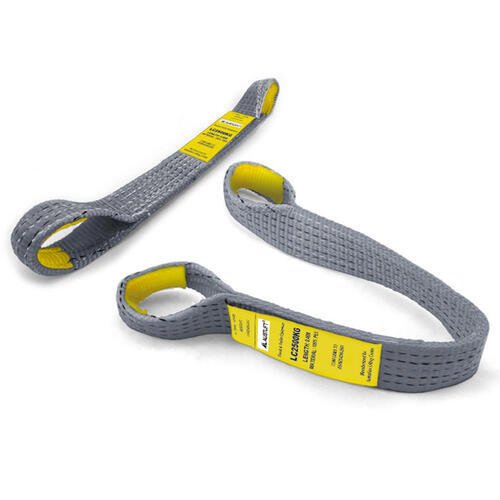
Austlift Round Sling 2Tonne
Choose your option
Austlift Soft Eye Axel Strap
Choose your option
Product Guides
Best Practices on V-Belt Installation & Maintenance
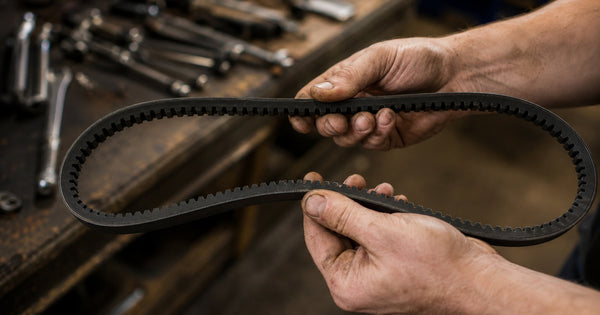
Get it right the first time—optimize your belt life, system performance, and uptime. Installing and maintaining a V-belt isn’t just about fitting it on the pulleys. It’s about maximizing belt lifespan, reducing downtime, and ensuring safety. At AIMS Industrial, we support your process with easy-to-understand guides that make belt maintenance easier and more accurate than ever. How Do I Install a V-Belt Properly? Power off all equipment and ensure its locked out. Fit the belt over the pulley grooves—do not force or stretch it. Adjust pulley positions to allow proper belt fit. Tension the belt according to spec (see next section). PRO TIP: Use a Belt Tension Tester to get accurate results every time.Choose from our: Single barrel tester (15kg) – ideal for individual belts Double barrel tester (30kg) – perfect for joined or multiple belts Both options are designed to measure belt tension accurately during installation or routine maintenance, helping extend belt life and minimise downtime. How Do I Tension a V-Belt? Use a tension gauge or follow the manufacturer’s deflection recommendations. Too loose = slippage. Too tight = bearing wear. How Often Should V-Belts Be Inspected? Check belts as part of your routine maintenance schedule—ideally: Monthly for high-use or industrial applications Quarterly for moderate-use machines Look for cracks, fraying, misalignment, or stretching. What Causes V-Belt Slippage? Incorrect tension Worn or dirty pulleys Oil or grease contamination Excessive wear or age How Do I Prevent V-Belt Misalignment? Use a straightedge, laser alignment tool, or pulley alignment app. Misaligned belts cause heat buildup, uneven wear, and energy loss. What Are the Signs of V-Belt Wear or Failure? Replace the belt if you see: Cracks or splits Glazing or shine Squealing noises Frayed edges Belt slipping or jumping Don’t wait until failure—proactive replacement saves cost and downtime. How Do I Replace a V-Belt? Power off and lockout the system. Loosen the tensioner or move pulleys to release the belt. Remove the worn belt and inspect pulleys for damage. Install the new belt, ensuring no twists or forceful stretching. Tension and align using proper tools or manufacturer specs. Can I Use Multiple V-Belts on the Same Drive? Yes—and no need to match if you're using high-tolerance belts like Gates.They stretch slightly in use, compensating for minor length differences. But with Aramid/Kevlar belts, matching is essential—they don’t stretch at all. Tip: Always replace all belts in a set together. Mixing old and new leads to uneven wear and reduced lifespan. Do V-Belts Require Lubrication? No. Never lubricate a V-belt. Keep belts and pulleys: Clean Dry Free from oil, grease, and debris Contaminants reduce grip, increase slippage, and deteriorate belt material. Final Thoughts Proper installation and maintenance of your V-belts can extend equipment life, reduce downtime, and save money. With smart tools, AI-driven support, and a commitment to an exceptional user experience, AIMS Industrial is here to make every belt install easier, safer, and more reliable. Shop replacement V-belts or speak to our team for expert help today. Looking for V-belts near you? We’ve got you covered! Whether you need a quick replacement or want to upgrade, local stock of quality V-belts is ready to keep your machines running smooth. At AIMS Industrial, we offer a wide range of V-belts in all major profiles, plus expert advice and fast delivery right to your door. Just tell us what you need, and we’ll help you find the perfect fit! Not all V-belts are built the same. Get the lowdown on types, materials, and what makes each one tick. Up Next:Troubleshooting & V-Belt Performance: Common Issues & Expert Fixes Pair this with our How to Measure a V-Belt guide for the right replacement size every time.
10 Reasons To Buy B-Safe Self-Retracting Lanyards
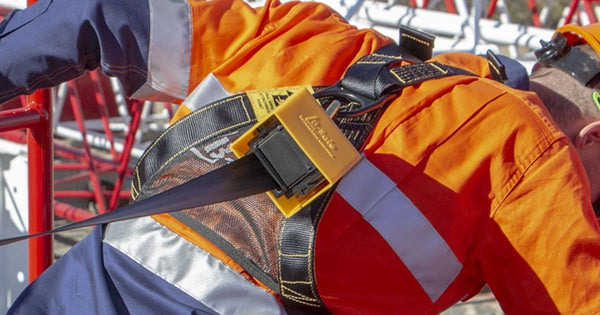
A retractable lanyard has a restoring spring that keeps the wire rope or webbing taut, which allows it to be activated immediately in case of a fall. You can use the B-Safe retractable lanyard when working on high buildings, bridges, roofs and other workplaces where there are fall hazards. You might consider choosing it over a standard shock-absorbing lanyard for the following reasons: Weighing only 1.2 kg, it’s very lightweight and compact. It gives you freedom of movement that is not possible with a longer shock absorber. Once it’s tied to an anchor point, you can move around easily to accomplish your task. The energy absorber is contained within the compact unit, so the risk of trips and falls caused by the lanyard dragging next to the worker are minimised. With a shorter “activation distance”, it reduces the risk of you hitting the ground or any obstructions at a lower level in the case of a fall. With a maximum length of 2.5 metres, it gives extended reach and versatility when working at heights. It’s manufactured in Australia. It’s tested to AS/NZS 1891.3 standards. It’s a cost-effective and versatile anchoring system. It has a built-in webbing guide, encased within the tough impact-resistant cover, that prevents twisting. It comes complete with two twist lock karabiners, making it safer compared to screw-type karabiners. Important: The safe working load limit of the B-Safe Self-Retracting Lanyard is one person up to 100 kgs, and it must be connected to a full body harness and a reliable anchor point rated to at least 15 kN. Shop for B-Safe self-retracting lanyards now. AIMS’ Note on Buying Industrial Supplies Breadth and depth of brands and categories: Go with a supplier that offers a wide range of reputable brands across multiple categories and sub-categories. Bulk purchase discounts: For large orders, check if you can take advantage of volume leverage. Some suppliers offer business accounts* that give you access to special pricing (volume discounts), preferential support and even credit eligibility (subject to supplier approval, terms and conditions). Product and service information: Evaluate the completeness and usefulness of data in their online product listings. Prudent suppliers will include as much useful information as possible to help you assess and compare products. In terms of service info, the supplier’s FAQs (if any) will give you a good idea of their standard policies*, processes and commitments. Promotions: Check for ongoing promotional campaigns so you can get the best prices. Many suppliers run regular discount-based promos. Some can point you to government-hosted rebate programmes like the SafeWork NSW $1000 Small Business Rebate. Safety compliance: Make sure the product in question meets Australian safety standards and regulations, especially if there are relevant compliance requirements or work health and safety (WHS) laws that apply to your business or state. Look for relevant certifications and markings where necessary. Supplier reliability: Choose reputable suppliers with a proven track record of delivering quality products and reliable customer service. Warranty and support: Check warranty terms and after-sales support* options, as this can be crucial in case of product defects or performance issues. Lead time and availability: Confirm product availability and estimated delivery times to avoid delays in your projects. Returns: Familiarise yourself with the suppliers returns and exchange policy in case you receive incorrect or damaged items. Delivery: Clarify delivery terms, including estimated delivery times, shipping costs and who handles insurance during transit (where applicable). *Need help with a purchase decision? Contact us directly via chat or send an email to sales@aimsindustrial.com.au.
General FAQs about V-Belt
Do V-belts require lubrication?No, V-belts do not require lubrication and should be kept free of oil and grease
What Is A V-Belt And How Does It Work?
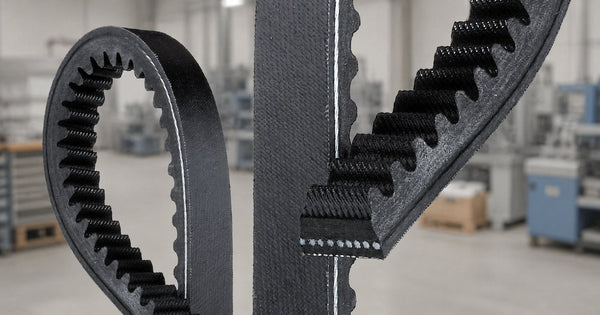
What is a drive belt? A drive belt transfers rotational power between two pulleys, replacing a chain or direct coupling. The most common industrial type is the V-belt — a trapezoidal rubber-and-fabric belt that wedges into matching pulley grooves under load, multiplying friction without slip. Drive belts run pumps, compressors, fans, conveyors, ride-on mowers, and most plant machinery. Modern variants include cogged V-belts, banded (joined) V-belts for shock loads, timing belts for synchronous drives, and poly-V (multi-rib) belts for car engines. When your equipment runs smoothly, your operations do too. One component quietly doing the heavy lifting behind the scenes? The V-belt. Whether you’re a mechanic, plant manager, or weekend warrior, understanding how V-belts work — and choosing the right one — can save you costly downtime. What Is a V-Belt? A V belt is a mechanical power transmission belt with a trapezoidal (V-shaped) cross-section. It's designed to fit snugly into pulley grooves, creating high friction and efficient torque transfer from a motor to the driven component. Key Features: Trapezoidal shape for better grip and reduced slippage Commonly made of rubber, with reinforced cords Used across industries: HVAC, mining, manufacturing, agriculture, and more Why V-Belts Outperform Flat Belts When comparing V-belts and flat belts, the advantages are clear: More Stability – The wedging effect reduces lateral movement. Better Alignment – The V-shape naturally centers the belt. Less Slippage – More grip equals more reliable torque transfer. Energy Efficient – Less energy loss due to slippage. For power transmission that needs to stay steady under pressure, V-belts offer a dependable upgrade. How Long Do V-Belts Last? A well-maintained V-belt can last thousands of hours — but only if you take care of it. Here’s what impacts lifespan: Proper Tensioning – Too tight = stress. Too loose = slippage. Accurate Alignment – Misalignment causes uneven wear. Regular Inspection – Spot cracks or frays before they fail. Tip: Schedule regular belt checks in your preventive maintenance routine to avoid costly surprises. Where Are V-Belts Commonly Used? V-belts are the unsung heroes of: Industrial Equipment (conveyors, compressors) Agricultural Machinery (tractors, harvesters) Automotive Systems (fans, alternators) Home Appliances (washing machines, HVAC units) If it spins and it needs power, chances are there’s a V-belt in the mix. What Are the Disadvantages? No product is perfect — and V-belts do have some limitations: Can Wear Quickly if misaligned or over tensioned. Not Ideal for High-Speed or High-Torque applications. May Require More Frequent Maintenance than synchronous belts. Still, when used in the right setting, they offer excellent value and performance. V-Belts vs. Timing Belts Here’s the quick comparison: Feature V-Belt Timing Belt Power Transfer Friction-based Tooth-based (synchronous) Slippage Possible (if worn) No slip Application General-purpose High precision (e.g., camshafts) Timing belts are precise — but V-belts are versatile and cost-effective. V-Belt vs. Serpentine Belt A serpentine belt is actually a multi-ribbed version of a V-belt, commonly found in modern vehicles. It drives multiple accessories (alternator, water pump, A/C) using just one long belt. It’s more space-efficient, but also requires more tension control. Looking for V-belts near you? We’ve got you covered! Whether you need a quick replacement or want to upgrade, local stock of quality V-belts is ready to keep your machines running smooth. At AIMS Industrial, we offer a wide range of V-belts in all major profiles — plus expert advice and fast delivery right to your door. Just tell us what you need, and we’ll help you find the perfect fit! Not all V-belts are built the same. Get the lowdown on types, materials, and what makes each one tick. Up Next: Understanding the Types and Construction of V-Belts: A Modern Guide Cross-reference our V-Belt Measurement guide for classical (A, B, C, D), narrow (SPA, SPB, SPC, SPZ) and FRAS sections. More Common Questions What is a drive belt used for? A drive belt transmits power from one rotating shaft to another by friction between the belt and pulleys. They are used in automotive engines to drive alternators, water pumps and air conditioning compressors; in industrial machinery to drive fans, pumps and conveyors; and in agricultural equipment to drive cutters, augers and PTO components. Drive belts allow flexibility in shaft positioning, absorb shock loads, and slip safely if the driven load jams. How long does a drive belt last? Drive belt life depends heavily on application, tension, alignment and operating conditions. Automotive serpentine belts often last 60,000 to 100,000 kilometres with regular inspection. Industrial V-belts can last anywhere from a few months to several years depending on duty cycle, belt quality, and how well the drive is tensioned and aligned. Inspect belts regularly for cracks, glazing, fraying and missing chunks — any of these mean replacement. What's the difference between a V-belt and a drive belt? Drive belt is the general term for any belt that transmits power between shafts. A V-belt is a specific type of drive belt with a trapezoidal cross-section that wedges into matching grooved pulleys. Other drive belt types include flat belts, timing belts (toothed for synchronous drive), and ribbed serpentine belts (multiple parallel ribs). V-belts dominate industrial drives because they grip well, transmit high power and are inexpensive to replace. How do I know what drive belt I need? Identify the belt by reading the part number printed on the belt itself — for example A48, SPB1800, or 5L420 — and order the same number. If the markings are worn off, measure the outside circumference with a tape measure, the top width, and the depth. Drive belts use standard cross-section codes (A, B, C, SPA, SPB, SPC) that match the pulley grooves — using the wrong section will damage the belt and the pulleys.