


- What is a hot work permit and when do you need one
- Why is a hot work permit necessary
- Who issues hot work permits
- General process in getting a hot work permit
- Key action items and checklist (as per SafeWork NSW)
What is a hot work permit and when do you need one
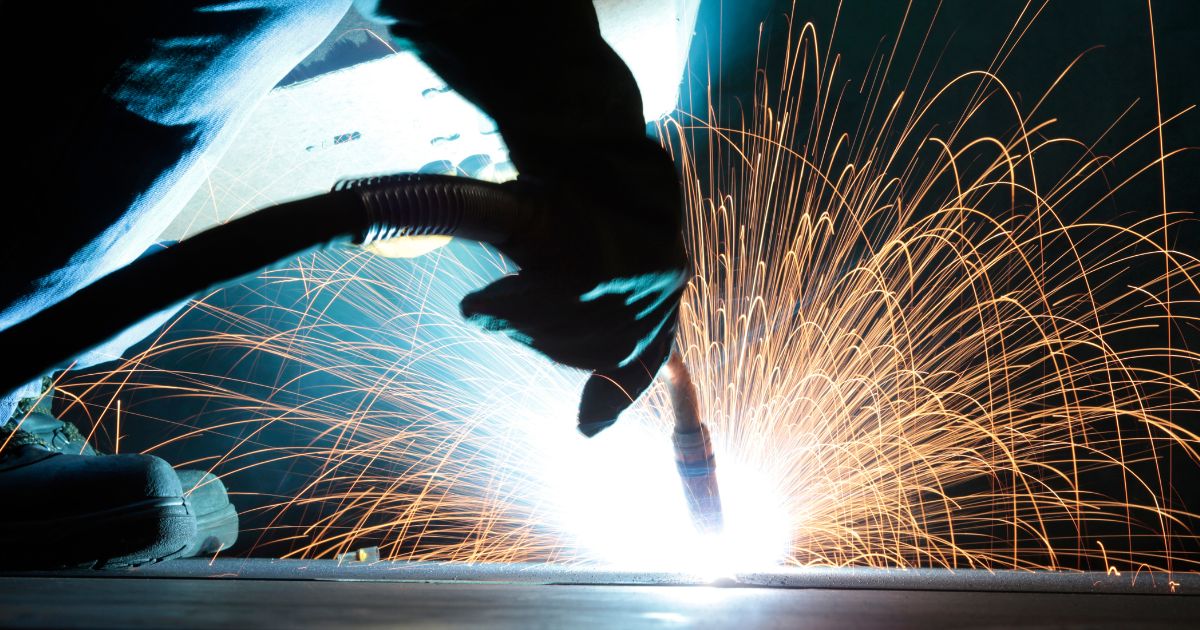
You'll need a hot work permit in Australia whenever your work involves open flames (eg welding, brazing and soldering), produces sparks or generates hot surfaces with enough heat to ignite flammable materials.
This applies to situations beyond just welding and includes using equipment like:
- Cutting torches
- Grinding tools
- Brazing equipment
- Soldering tools
- Bitumen boilers
General rule: If you are unsure whether your welding work qualifies for a hot work permit, it is always better to err on the side of caution and obtain one.
Exception: You typically won't need a permit if your hot work is done within a designated hot work area specifically designed for such activities, like a welding bay in a workshop. The principle is that these areas should already have built-in safety measures in place to begin with.
Key considerations:
- Many materials and substances found in workplaces are flammable or combustible – be it solids, liquids and gases.
- The risks associated with these materials may not be immediately obvious. For example, flammable substances can release vapors at room temperature that are difficult to detect without special instruments.
- Any hot work process can be a potential ignition source for flammable or combustible materials.
- Serious or fatal injuries can occur when hot works are undertaken on or near flammable or combustible materials without proper control measures. These injuries can result from primary ignition or secondary effects such as smoke, toxic fumes, oxygen depletion or structural collapse.
Why is a hot work permit necessary
The primary purpose of a hot work permit is to:
- Identify hazards: Before commencing actual hot work, the permit forces you to do a thorough assessment of the work area to identify flammable materials, potential fire sources and any other hazards.
- Identify proactive and reactive control measures: It requires you to outline specific steps to proactively reduce risks, such as by (1) assigning a fire watch person and (2) removing flammable items in the work area. In addition, it reminds you to implement reactive measures for just-in-case scenarios, such as by having functional fire extinguishers nearby (ideally with five meters from the actual hot work area) and providing fire blankets for worse case scenarios where the worker(s) need to safely evacuate the area.
- Secure clear authorisation: The permit must be signed by a designated, knowledgeable person in the business to ensure associated risks are understood and mitigated.
- Make workers aware of ongoing hot work: It makes all workers involved aware of the fire risk, the planned precautions and who's responsible for safety.
On a practical note, it’s simply because nobody wants serious fires like this to happen ever again.
Who issues hot work permits
The permit is issued by a designated permit officer in the business / worksite who is authorised by the business to do so, and they typically go by these roles:
- Authorised Officer: He / She is a person authorised by the Works Supervisor to issue hot work permits. This person may also be a Fire Prevention officer.
- Works Supervisor: He / She is responsible for ensuring that hot work permits are issued prior to commencing work and that all necessary precautions are taken.
- Health and Safety Representative (HSR): He / She is a representative elected by the work group to manage health and safety issues. They may also be involved in issuing hot work permits.
- Permit Issuer: He / She is a person authorised by the Works Supervisor to issue hot work permits. This person may also be an Authorised Officer.
Alternatively, they could also be someone in the business / site with these titles:
- Building manager
- Site manager
- Production manager
- Safety officer
The designated permit officer is responsible for -- and has the necessary training and expertise to -- ensuring that hot work permits are issued per the relevant regulations and procedures to ensure the safety of workers and the public.
Note: In general, the designated permit officer should be extensively knowledgeable about the site, safe work practices, and risk assessment especially pertaining to hot work. Keep in mind that specific roles and titles may vary per business / worksite, so make sure to check with your management.
General process in getting a hot work permit in Australia
To get a hot work permit, a risk assessment is first done to identify hazards and put safety measures in place. Then, a permit is filled out with details and authorized by the designed person in the business. Workers involved must be aware of the permit and follow safety precautions.
Specifically, the business should:
1. Identify the hot work activity: Hot work includes activities such as welding, cutting and grinding that produce hot metal, radiant heat and sparks.
2. Assign responsibility: Ensure a competently trained and responsible individual who serves as the designated permit officer (as described in the previous section) will manage the permitting process, and that he / she completely understands associated risks involved and that the risk mitigation measures are in place.
Important:
- The business, employer, PCBU or site manager -- via the designated permit officer -- is primarily accountable and responsible for overseeing the application.
- Individual welders cannot secure a hot work permit for themselves.
- The permit is typically valid for one shift (around 8 hours) only. If the work extends beyond that, a new permit will be needed.
- The permit should be displayed prominently at the worksite.
- A copy of the permit should be kept by the issuer and another copy should be with the person doing the welding for reference.
- There might be slight variations in the process depending on the specific state or territory.
3. Prepare the worksite: The designated permit officer and all involved personnel and contractors should ensure the work area is free from combustible materials prior to commencing actual work. It is ideal to install welding screens or other protective devices to prevent welding flash to onlookers, pedestrians and bystanders.
4. Document the hot work permit: The designated permit officer should ensure the hot work permit includes essential information such as:
- Name of the person performing the hot work
- Location of the hot work process
- Duration of the hot work process and work date, including start and finish times
- Nature of the work (welding, cutting etc)
- Name of the person issuing the hot work permit
- Name of the person performing the fire watch (if different from the person performing the hot work)
5. Monitor and review: Regularly monitor the hot work permit to ensure all hot work activities are conducted according to the regulations and requirements.
6. Inspect post-work and sign off: The designated permit officer must inspect the hot work area after the fact and sign off that it is free of fire hazards (eg no smoldering embers etc) and safe for normal work resumption.
Additional reminders:
- Train employees and contractors: Provide mandatory training on hot work safety to all employees and contractors, especially new staff and contractors. Maintain training records as part of your organization's due diligence.
- Obtain the right equipment: Ensure you have the necessary equipment, including fire extinguishers, welding screens, welding or fire blankets, pylons, caution tape and signage to cordon off the area and provide visual warnings.
- Comply with local regulations: Familiarise yourself with local regulations and standards, such as the WHS Act (Model Work Health and Safety Act) and the Safe Work Australia Welding Processes Code of Practice.
Key action items and checklist (as per SafeWork NSW)
Here is the gist of their action items list (of key considerations in the hot work permitting process):
- Before doing actual hot work, identify and eliminate or control hazards:
- Flammable materials such as rubbish, paper and dust
- Confined spaces
- Sparks and flash by removing combustibles or using covers
- Protect or isolate services (electrical, gas lines, etc)
- Ventilation
- Secure and store gas cylinders safely
- Have firefighting equipment ready
- Limit people and vehicles in the area
- Use a fire watch person to monitor
- Isolate and secure the area with signage
- Train personnel on emergency procedures and evacuation
- Wear proper personal protective equipment
- Check for smoldering embers before leaving the area
Your hot work permit should also cover:
- Housekeeping
- Inspection of worksite
- Identification and handling of hot products after hot work
It should also account for training for all site personnel and contractors regarding:
- Hot work hazards
- Hot work permit system use
- Firefighting equipment use
- Emergency and evacuation procedures
Important: The designated permit officer should inspect the site for safety and sign off on the permit to complete the process.
Grinding is one of the hot work activities a permit covers. For the safety detail on the grinding side — wheel selection, RPM matching, guard use and kickback control under AS 1788.2 — see our Grinding Wheel Safety: Selection, Mounting & AS 1788 guide.
AIMS’ Note on Buying Industrial Supplies
- Breadth and depth of brands and categories: Go with a supplier that offers a wide range of reputable brands across multiple categories and sub-categories.
- Bulk purchase discounts: For large orders, check if you can take advantage of volume leverage. Some suppliers offer business accounts* that give you access to special pricing (volume discounts), preferential support and even credit eligibility (subject to supplier approval, terms and conditions).
- Product and service information: Evaluate the completeness and usefulness of data in their online product listings. Prudent suppliers will include as much useful information as possible to help you assess and compare products. In terms of service info, the supplier’s FAQs (if any) will give you a good idea of their standard policies*, processes and commitments.
- Promotions: Check for ongoing promotional campaigns so you can get the best prices. Many suppliers run regular discount-based promos. Some can point you to government-hosted rebate programmes like the SafeWork NSW $1000 Small Business Rebate.
- Safety compliance: Make sure the product in question meets Australian safety standards and regulations, especially if there are relevant compliance requirements or work health and safety (WHS) laws that apply to your business or state. Look for relevant certifications and markings where necessary.
- Supplier reliability: Choose reputable suppliers with a proven track record of delivering quality products and reliable customer service.
- Warranty and support: Check warranty terms and after-sales support* options, as this can be crucial in case of product defects or performance issues.
- Lead time and availability: Confirm product availability and estimated delivery times to avoid delays in your projects.
- Returns: Familiarise yourself with the suppliers returns and exchange policy in case you receive incorrect or damaged items.
- Delivery: Clarify delivery terms, including estimated delivery times, shipping costs and who handles insurance during transit (where applicable).
*Need help with a purchase decision? Contact us directly via chat or send an email to sales@aimsindustrial.com.au.


People Also Ask — When You Need a 'Hot Work Permit'
Q: When is a hot work permit required in Australia?
A hot work permit is required whenever work involving open flame, sparks, or heat (welding, grinding, cutting, brazing, soldering, or use of heat guns) is performed in an area where flammable or combustible materials are present — including most industrial facilities. Requirements are set by WHS regulations and facility-specific safety management systems; always check the site's specific requirements before commencing.
Q: How long is a hot work permit valid?
Hot work permits are typically issued for a single work period — usually one shift or one day — and must be renewed for each subsequent period. Some facilities issue permits for a specific duration (e.g., 4 hours). Permits are not transferable between workers or locations. Conditions on-site can change rapidly, so reissuing daily ensures a fresh hazard assessment.
Q: What is the minimum fire watch period after hot work?
The minimum fire watch period recommended by Safe Work Australia is 30 minutes after all hot work has ceased. However, many facilities and Australian Standards require longer periods — 60 minutes is common for high-risk areas, and some sites require continuous monitoring for several hours. Smouldering fires can ignite hidden combustibles long after the work is complete.
Q: What must a hot work permit include?
A hot work permit must include the work location and description, the name of the person performing the work, the start and end time, fire hazards identified and controls applied, fire extinguisher type and location, fire watch arrangements (including duration), and the authorising supervisor's signature. Site-specific permits may include additional requirements such as gas testing or isolation confirmation.
