

Choosing the Right LOCTITE® Product
LOCTITE® offers a variety of adhesives tailored for specific applications. Here's a quick rundown to help you choose:
-
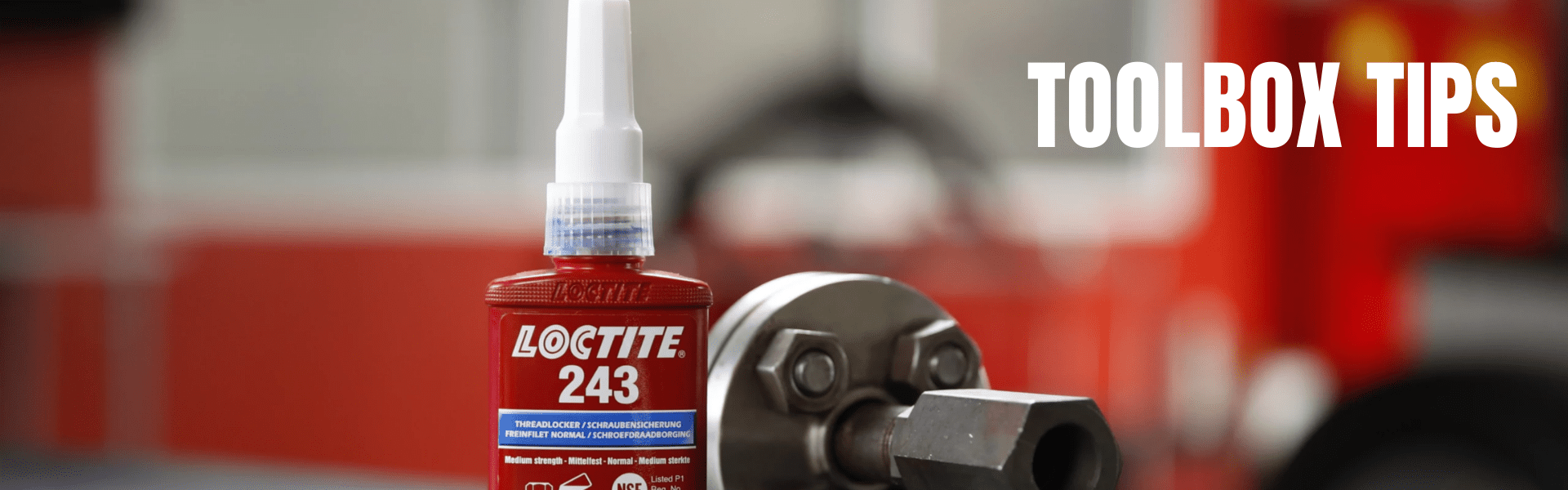
Threadlockers: Ideal for preventing unwanted movement, loosening, leaks, and corrosion on nuts, bolts, and threaded parts. They resist vibration and are perfect for securing fasteners.
-
Thread Sealants: Designed to seal threaded pipes and fittings, preventing leaks of gases and liquids. They cure to form a strong seal that resists pressure and vibration.
-
Retaining Compounds: Used to bond non-threaded, cylindrical metal assemblies. They fill the inner gaps between components and cure to form a strong, precision assembly.
-
Instant Adhesives: Also known as super glues, these are fast-curing adhesives ideal for bonding small to medium-sized parts. They work well on a variety of substrates, including plastics and elastomers.
Handy Tips
-
Surface Preparation: Ensure surfaces are clean and free from contaminants for optimal bonding.
-
Primer Use: For inactive metals or low-temperature applications, using a primer can speed up the curing process.
Explore LOCTITE® Products
Ready to get started? Check out these LOCTITE® products available at AIMS Industrial:
Other LOCTITE® Guides
- Using Loctite for Pump Maintenance
- Instant adhesives, accelerators and primers
- LOCTITE® product application guide
- General purpose vs specialty adhesive
- Threadlockers for fasteners
- LOCTITE® user guide
- Feedback from users in real-life applications


People Also Ask — Choosing the Right Loctite Product
Q: What is the difference between Loctite threadlocker grades?
Loctite threadlockers are colour-coded by strength. Purple (222) is low-strength and designed for small fasteners where disassembly with hand tools is required. Blue (243) is medium-strength and the most common general-purpose grade where disassembly with hand tools is possible. Red grades are high-strength and require heat for disassembly. The correct grade depends on fastener size and whether the joint needs to be serviceable.
Q: What is the difference between Loctite thread sealant and threadlocker?
Threadlockers are designed to lock metal fasteners and prevent loosening from vibration. Thread sealants are formulated specifically to seal pipe threads and fittings against fluid and gas leakage while also locking the thread. They must not be substituted for each other.
Q: When should I use Loctite retaining compound instead of threadlocker?
Retaining compounds are designed for bonding cylindrical assemblies such as press-fit bearings, bushings, gears and sleeves where additional retention beyond an interference fit is needed. They fill micro-gaps between mating surfaces and provide shear strength. Threadlockers are not suited to this application as they are not designed for large contact areas between smooth cylindrical surfaces.
Q: Can Loctite threadlocker be used on stainless steel fasteners?
Loctite products work on stainless steel but stainless is a passive metal that can slow the anaerobic cure process. Loctite recommends applying a small amount of primer or activator to stainless steel surfaces before applying the adhesive to ensure a full, rapid cure. Without primer, cure may be incomplete particularly in low-temperature conditions.
