

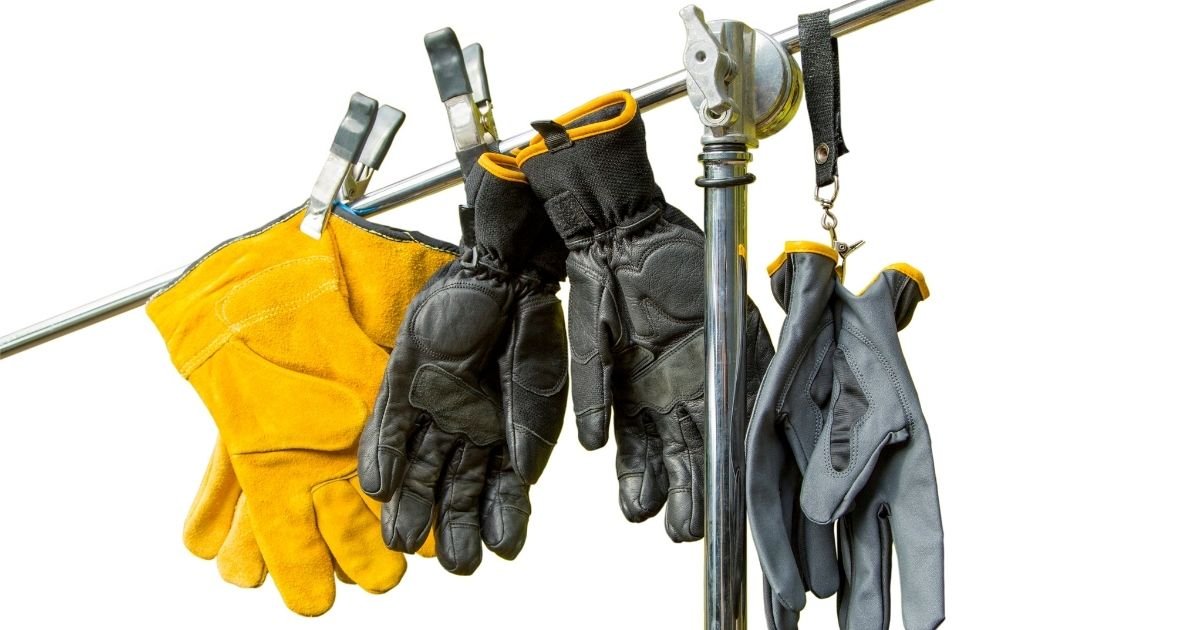
Work gloves in Australia are governed by the AS/NZS 2161 series, which adopts the European EN 388 (mechanical), EN 407 (heat), EN 511 (cold), EN 374 (chemical) and EN 60903 (electrical) test methods. The EN 388 rating prints four digits (abrasion 0–4, blade cut Coupe 0–5, tear 0–4, puncture 0–4) plus an ISO 13997 Cut Level letter (A–F) and an optional P for impact. Choose the lowest cut level that genuinely covers the hazard — over-specified gloves get refused, get pocketed, and end up not worn.
Bookmark our Engineering Reference Charts hub for related Australian-standard references, sizing tables and PPE selection guides.
Glove Selection — Quick Reference by Application
| Application | Recommended Type | Min Cut Level | Key Feature |
|---|---|---|---|
| General handling / warehousing | Knit + PU or nitrile coating | A1 (Cut 1) | Dexterity |
| Construction / building | Leather rigger or coated knit | A2–A3 (Cut 2–3) | Abrasion + grip |
| Mining surface / underground | HPPE liner + nitrile/foam grip | A4–A5 (Cut 4) | Oil/water grip |
| Metal fabrication / sheet work | HPPE / aramid + leather palm | A5–A6 (Cut 5) | Cut + heat combo |
| Glass handling / automotive glass | HPPE with steel/glass-fibre wrap | A7–A9 (Cut 5+ TDM) | High cut score |
| Chemical handling / decanting | Nitrile, neoprene, butyl, Viton | n/a — EN 374 | Breakthrough time |
| Welding (MMAW / Stick) | Leather gauntlet | n/a — EN 407 | Heat + spatter |
| Welding (TIG) | Goatskin or kidskin | n/a — EN 407 | Dexterity |
| Cold storage / freezer work | Insulated knit + HPT or PVC | A2+ (Cut 2) | EN 511 cold |
| Hot work / foundry | Kevlar / aramid / leather | n/a — EN 407 | Contact + radiant heat |
| Live electrical work | Class 00–4 rubber insulating | n/a — EN 60903 | Voltage rating |
| Food prep / pharma / medical | Disposable nitrile / vinyl | A3+ underglove if cutting | Single-use, AQL |
This guide focuses on selection methodology, standards and materials. For a category-by-category walkthrough of specific glove ranges (rigger, mechanic, disposable, leather, knit, anti-vibration, etc.), see our companion Work Glove Types: A Complete Guide. This article is the standards-and-selection hub.
AS/NZS 2161 Series — The Australian Framework
Australia and New Zealand adopt the European glove-testing methodology under the AS/NZS 2161 series. Each part covers a different hazard category. The structure is important because compliance and labelling for the Australian market reference the AS/NZS part number — not the underlying EN standard alone.
| Standard | Scope | Equivalent EN Standard |
|---|---|---|
| AS/NZS 2161.1 | General requirements and test methods — terminology, sizing, marking, packaging information | EN 420 (now EN ISO 21420) |
| AS/NZS 2161.2 | Mechanical hazards — abrasion, cut, tear, puncture (and impact in later revisions) | EN 388 |
| AS/NZS 2161.10 | Chemical and microbiological hazards — permeation, penetration, degradation | EN 374 |
| AS/NZS 2161.4 | Thermal hazards (heat and flame) — flammability, contact heat, convective heat, radiant heat, molten metal splash | EN 407 |
| AS/NZS 2161.5 | Cold protection — contact cold, convective cold, water penetration | EN 511 |
| AS/NZS 2161.6 | Electrical insulating gloves — voltage class 00 to 4 | EN 60903 / IEC 60903 |
AS/NZS 2161.2 current edition is 2020 (replaced 2005); AS/NZS 2161.10 covers chemical and microbiological protection — historical 2005 edition has been progressively replaced through the 2020 cycle. Confirm with the Standards Australia catalogue before quoting an exact year in technical documentation.
A glove rated to AS/NZS 2161.2 must also meet AS/NZS 2161.1 (the general requirements). When you read a label or spec sheet, the part number tells you which hazards it has been tested against. A glove tested only against AS/NZS 2161.2 is not certified for chemical protection regardless of how it feels in the hand.
EN 388 / AS/NZS 2161.2 — The Mechanical Rating Explained
The four-digit EN 388 rating you see printed on the back of a glove (often followed by one or two letters) is the most commonly misread number in PPE selection. Each digit and letter represents a separate test result.
The four digits — read left to right
| Position | Hazard | Scale | Test method |
|---|---|---|---|
| 1 | Abrasion resistance | 0–4 | Martindale cycles to wear through |
| 2 | Blade cut resistance (Coupe) | 0–5 | Rotating circular blade, cycles to cut through |
| 3 | Tear resistance | 0–4 | Force in Newtons to propagate a tear |
| 4 | Puncture resistance | 0–4 | Force in Newtons to push a steel stylus through |
The optional letters — added by EN 388:2016
| Position | Rating | Scale | Test method |
|---|---|---|---|
| 5 | ISO 13997 Cut (TDM) | A–F | Single blade-edge pass, force in Newtons to cut at 20mm travel |
| 6 | Impact protection | P (pass) or blank | EN 13594 method — knuckle / back-of-hand padding |
Abrasion levels (digit 1)
| Level | Martindale cycles to wear through | What it means in practice |
|---|---|---|
| 1 | ≥ 100 | Very light duty — short-use disposable |
| 2 | ≥ 500 | Light handling, short-shift use |
| 3 | ≥ 2,000 | Standard industrial — most general-purpose gloves |
| 4 | ≥ 8,000 | Heavy-duty — leather riggers, premium HPPE |
Blade cut — Coupe (digit 2) vs ISO 13997 (letter)
The Coupe test (digit 2) uses a rotating circular blade that loses sharpness against highly cut-resistant materials. This means a HPPE or steel-wrapped glove that should rate 5 sometimes scores artificially high because the blade dulls during testing. The EN 388:2016 revision added the ISO 13997 TDM test (the A–F letter) to fix this — TDM uses a fresh straight blade and a constant draw, giving a reliable result for high-cut materials. For any glove rated 3 or higher on Coupe, the ISO 13997 letter is the value you should select against.
| Coupe Level | Cycles to cut | ISO 13997 Letter | Force at 20mm (Newtons) | Typical use |
|---|---|---|---|---|
| 1 | 1.2 | A | 2 N | Very light, basic abrasion only |
| 2 | 2.5 | B | 5 N | Light assembly, packaging |
| 3 | 5.0 | C | 10 N | General industrial, light cutting hazards |
| 4 | 10.0 | D | 15 N | Steel handling, light sheet metal |
| 5 | 20.0 | E | 22 N | Heavy steel work, automotive assembly |
| — | — | F | 30 N | Glass handling, pulp and paper, recycling sorting |
Practical mapping: A glove printed "4543B" means abrasion 4 (top tier), Coupe cut 5 (top of Coupe scale), tear 4, puncture 3, ISO 13997 Cut B. The Coupe rating of 5 should be treated with caution if you're choosing for genuine high-cut work — the TDM letter "B" is the more honest number, telling you it really only stops a 5 Newton draw cut. For aviation glass or recycling sort lines, that's not enough.
Tear and puncture (digits 3 and 4)
Tear resistance measures the force needed to propagate an existing nick or hole — relevant when working around staples, wire ends or rough timber. Puncture resistance measures resistance to a blunt steel stylus pushed straight through — relevant for needle, splinter and broken-wire hazards. Puncture under EN 388 is not a hypodermic-needle test; needle puncture is covered separately under ANSI/ISEA 105 in the US (no direct AS/NZS equivalent). For medical, recycling sort lines and waste handling, ANSI needle-stick rated gloves are the relevant specification.
Impact protection (the P)
Added in EN 388:2016, the P marking confirms the glove passed the EN 13594 impact test on the back of the hand and knuckles. Impact-rated gloves (TPR or hard-plastic backing) are standard in oil and gas, mining and heavy mechanical work where dropped tools, swung wrenches and hand-pinch hazards are routine. The test is pass/fail — there's no Level 1/Level 2 for impact under EN 388 (a separate ANSI/ISEA 138 standard does grade impact 1–3).
Cut Levels A–F: When You Actually Need Each Level
The ISO 13997 / EN 388 Cut Level letter is the most useful single number for matching a glove to a cutting hazard. Here is what each level genuinely covers — and the trade-off in dexterity that comes with each step up.
| Cut Level | Newtons at 20mm | Real-world hazard it covers | Industry examples |
|---|---|---|---|
| A | 2 N | Paper-cut grade — light handling, packaging, general assembly. Cardboard, fibre board. | Warehousing, retail handling, light food prep (with disposable over-glove) |
| B | 5 N | Light blade exposure — handling boxed product with razor blades inside, light maintenance. | Light fabrication, automotive assembly trim, electronics |
| C | 10 N | Standard industrial cut hazard — sheet steel edges, banding strap, light glass. | General construction, sheet metal work, ducting fabrication |
| D | 15 N | Heavier sheet steel, structural fabrication, light glass handling. | Structural steel, light glazing, automotive body shop, mining surface |
| E | 22 N | Heavy steel edges, light automotive glass, knife handling (food processing line). | Heavy steel, glass cutting, abattoir / meat processing |
| F | 30 N+ | High-risk: aviation glass, recycling sort lines, scrap metal handling, knife / blade sorting. | Glass manufacturing, materials recovery facilities, sharps recycling |
EN 374 / AS/NZS 2161.10 — Chemical Protection
Chemical gloves are rated against three properties: permeation (chemical passing through the intact glove material at the molecular level), penetration (chemical passing through a defect — pinhole, seam failure) and degradation (the glove material physically breaking down). The most important single number is the breakthrough time — how long it takes a specific chemical to permeate the material under continuous exposure.
| EN 374 Performance Level | Breakthrough Time | Practical interpretation |
|---|---|---|
| Level 1 | > 10 minutes | Splash protection only — remove and replace immediately on contact |
| Level 2 | > 30 minutes | Brief handling |
| Level 3 | > 60 minutes | Standard chemical handling |
| Level 4 | > 120 minutes | Extended handling |
| Level 5 | > 240 minutes | Full-shift use against specified chemical |
| Level 6 | > 480 minutes | Maximum-duration use |
EN 374 labels list breakthrough against a panel of test chemicals identified by code letters (A through T). Examples: A = methanol, B = acetone, C = acetonitrile, D = dichloromethane, E = carbon disulphide, F = toluene, G = diethylamine, K = sodium hydroxide 40%, L = sulphuric acid 96%, etc.
This is the trap most chemical-glove purchasers fall into: a glove rated EN 374 Type A against six chemicals tells you nothing about how it performs against the specific chemical you're actually decanting. Always cross-reference the chemical you're working with against the manufacturer's permeation chart. Don't assume "chemical-resistant" means "resistant to your chemical".
Type A, Type B, Type C — coverage breadth
EN 374-1:2016 added a Type classification based on how many chemicals from the test panel the glove resists at Level 2 (30 min) or better:
- Type A — at least 6 chemicals from the panel at Level 2 or better. Highest coverage.
- Type B — at least 3 chemicals at Level 2 or better.
- Type C — at least 1 chemical at Level 1 (> 10 min). Light splash protection only.
EN 407 / AS/NZS 2161.4 — Heat and Flame
The EN 407 / AS/NZS 2161.4 marking carries a flame icon and a six-digit code. Each digit rates a different thermal hazard.
| Position | Hazard | Scale | What it means |
|---|---|---|---|
| 1 | Burning behaviour | 0–4 | Self-extinguishing time after ignition |
| 2 | Contact heat | 0–4 | Temperature glove can hold for 15s without > 10°C rise inside |
| 3 | Convective heat | 0–4 | Time to transfer specified heat in convection |
| 4 | Radiant heat | 0–4 | Time before back-of-hand reaches 24°C above ambient |
| 5 | Small molten metal splashes | 0–4 | Number of drops to cause specified temperature rise |
| 6 | Large molten metal splashes | 0–4 | Grams of molten metal causing smoothing or pinholes |
| Contact Heat Level | Surface Temp | Use case |
|---|---|---|
| 1 | 100°C | Hot water, light catering |
| 2 | 250°C | Light foundry, hot working surfaces |
| 3 | 350°C | Welding contact, hot bar handling |
| 4 | 500°C | Foundry, furnace work |
EN 511 / AS/NZS 2161.5 — Cold Protection
EN 511 / AS/NZS 2161.5 marking carries a snowflake icon and a three-digit code:
| Position | Hazard | Scale | What it means |
|---|---|---|---|
| 1 | Convective cold | 0–4 | Insulation against cold air |
| 2 | Contact cold | 0–4 | Resistance to direct contact with cold surfaces |
| 3 | Water penetration | 0 or 1 | 0 = water penetrates after 30 min; 1 = no penetration |
For Australian cold-storage and freezer work, look for at least Level 2 convective + Level 1 water penetration. For specialised cold-and-wet handling (fishing, abattoir wet line, dairy chilled rooms), Level 1 water penetration is essential — a glove that wicks moisture loses insulation immediately.
EN 60903 / AS/NZS 2161.6 — Live Electrical Work
Rubber insulating gloves for live electrical work are not general PPE. They are tested to defined voltage classes and must be paired with leather over-gloves to prevent abrasion damage to the dielectric layer.
| Class | Max Use Voltage AC | Proof Test Voltage | Use case |
|---|---|---|---|
| 00 | 500 V | 2,500 V | LV switchboard work, light electrical |
| 0 | 1,000 V | 5,000 V | LV distribution, secondary systems |
| 1 | 7,500 V | 10,000 V | Distribution network |
| 2 | 17,000 V | 20,000 V | HV distribution |
| 3 | 26,500 V | 30,000 V | HV distribution / sub-transmission |
| 4 | 36,000 V | 40,000 V | Sub-transmission |
Glove Categories — Quick Reference
| Category | Primary hazard | Common materials | AS/NZS reference |
|---|---|---|---|
| General purpose | Light abrasion, dirt, light cut | Cotton, polyester knit, PU/nitrile dipped | 2161.2 (Cut A–B) |
| Cut resistant | Cut, slice, draw cut | HPPE (Dyneema/Spectra), aramid (Kevlar/Twaron), glass-fibre wrap, stainless-steel wire | 2161.2 (Cut C–F) |
| Chemical resistant | Acids, solvents, caustics | Nitrile, neoprene, butyl, Viton, PVC, latex | 2161.10 |
| Heat resistant | Contact heat, radiant heat, flame | Kevlar/aramid knit, leather, aluminised, Nomex | 2161.4 |
| Cold resistant | Convective and contact cold | Insulated knit (ThermSmart), insulated nitrile / HPT, fleece-lined leather | 2161.5 |
| Electrical insulating | Live voltage shock | Natural rubber latex (vulcanised), composite dielectric | 2161.6 + AS/NZS 2225 |
| Anti-vibration | Hand-arm vibration syndrome (HAVS) | Gel-filled palm, foam-padded palm | 2161.2 + ISO 10819 |
| Disposable | Cross-contamination, light chemical splash | Nitrile, latex, vinyl | 2161.10 (single-use) |
| Welding | Heat, spatter, UV, abrasion | Cowhide, kidskin, goatskin, deerskin | 2161.2 + 2161.4 |
| Mechanics | Abrasion, light cut, oil/grip | Synthetic leather palm, spandex back, TPR knuckles | 2161.2 (Cut A–C) |
| Rigger | Abrasion, cut, drop hazard | Split cowhide leather | 2161.2 (Cut B–D) |
Material Properties Reference
| Material | Abrasion | Cut | Chemical | Heat | Comfort | Cost |
|---|---|---|---|---|---|---|
| Cotton knit | Low | Low | Low | Low | High | $ |
| Leather (split cowhide) | High | Med | Low | Med | Med | $$ |
| Leather (goatskin / kidskin) | Med | Med | Low | Med | High | $$$ |
| HPPE (Dyneema / Spectra) | High | Very high | Low | Low | High | $$$ |
| Aramid (Kevlar / Twaron) | High | High | Low | High | Med | $$$ |
| Stainless steel mesh / wire | Very high | Very high | Med | High | Low | $$$$ |
| Nitrile (coating or full) | High | Low | Good (oils, fuels) | Low | High | $$ |
| Neoprene | Med | Low | Good (acids, caustics) | Med | Med | $$ |
| Butyl rubber | Low | Low | Excellent (ketones, esters) | Low | Low | $$$$ |
| Viton (FKM) | Low | Low | Excellent (aromatics, chlorinated solvents) | High | Low | $$$$ |
| Natural rubber latex | Med | Low | Good (water-based, dilute acids) | Low | High | $ |
| PVC | Med | Low | Good (water-based, dilute acids/bases) | Low | Low | $ |
| Polyurethane (PU coating) | Med | Low | Low | Low | Very high | $$ |
Latex allergy: Type I latex allergy (immediate hypersensitivity to natural rubber proteins) is increasingly common in Australian workplaces, particularly in healthcare and food handling. Nitrile and neoprene are the standard latex-free alternatives. If you have any history of skin reaction to rubber, raise it with your WHS officer before being issued any latex glove — including disposable latex examination gloves.
Selection by Application — In Depth
Construction and General Building
Mixed hazards: abrasion from timber, masonry and steel; light cut from sheet edges; some impact risk from dropped tools. A coated knit with nitrile or PU palm at Cut A2–A3 is the workhorse — Cut B for finer-detail tasks, leather riggers for heavy handling. Look for Abrasion 3 minimum. For trenching, demolition and concrete work, add a foam-gasket or impact-rated back.
Mining (Surface and Underground)
Mining has the broadest glove demand in Australian industry. Surface mining: Cut A4–A5, oil/water grip coating (nitrile foam), impact-rated back (TPR knuckles), heat tolerance for hot ambient conditions. Underground: similar cut spec plus chemical splash resistance for diesel handling. Cold conditions in WA night shifts and Tasmanian operations push EN 511 cold rating into the spec. Many WA and QLD mining sites mandate Class A4+ minimum for all hands-on production work.
Metal Fabrication
Sheet steel and section work generates draw-cut hazards from edges. Step up to Cut A5–A6 (TDM E) with leather palm for grip. For welding-adjacent fabrication (positioning, tacking, fit-up before welding), heat-tolerant aramid liner with leather palm bridges the cut and heat hazards. See our Welding Eye Protection Guide for the full PPE picture in welding bays.
Welding
MMAW (stick) and MAG/MIG: heavy leather gauntlet (cowhide), 30cm+ cuff, lined palm. TIG: thin goatskin or kidskin gauntlet — dexterity is the priority because TIG demands fine torch control. Browse welding gloves for the range. Pair with proper welding helmet selection — a glove rated for the wrong process either burns through (TIG glove on stick work) or kills your dexterity (stick glove on TIG).
Glass Handling and Recycling
Glass cutting, glazing and sharps recycling are genuine Cut F territory. HPPE with glass-fibre or stainless-wire wrap, TDM rating F (30+ Newtons). For automotive glass, also look for an impact-rated back to handle dropped panels. This is one of the few categories where over-specification is genuinely warranted — the cost of a Cut F glove is trivial against the cost of a tendon injury.
Chemical and Laboratory Work
Selection is chemical-specific, not glove-specific. Before issuing chemical-resistant gloves, identify every chemical in the work envelope and cross-reference each against the manufacturer's permeation chart. Nitrile covers most oils, fuels and dilute acids/bases. Neoprene handles a broader range of acids and caustics. Butyl is the specialist for ketones (acetone, MEK) and esters. Viton is the specialist for aromatics (toluene, xylene) and chlorinated solvents. No single glove material covers everything. Multi-chemical environments often need two glove types issued and worn task-by-task. See chemical-resistant gloves.
Cold Storage, Freezer Work and Refrigeration
EN 511 rating with at least Level 2 contact cold for routine freezer work. For wet-and-cold environments (abattoir wet line, fishing, dairy), Level 1 water penetration is non-negotiable — a glove that wicks moisture chills out within minutes. HPT (hydrophobic) coatings on insulated knit are the current best balance of dexterity and protection. See cold-resistant gloves.
Hot Work, Foundry and Furnace
Aramid (Kevlar) knit gloves rate Contact Heat Level 2–3 (250–350°C). For foundry and furnace work above 500°C, aluminised gauntlets reflect radiant heat. The standard practice is layered: aramid liner glove for dexterity plus leather or aluminised over-glove for the high-temperature work. Never use synthetic-blend gloves around open flame — many synthetic fibres melt at 200–250°C and adhere to skin.
Food Processing, Pharmaceutical and Medical
Disposable nitrile (AQL 1.5 or lower for medical, AQL 0.65 for examination grade) handles the cross-contamination control. For food prep with knife exposure, layer a Cut A5+ HPPE glove under a disposable nitrile glove. The HPPE provides cut protection; the nitrile provides food-contact compliance and chemical/protein barrier. See disposable gloves.
Automotive Service and Mechanical Work
Synthetic leather palm with reinforced fingertips, mesh or spandex back for breathability, TPR knuckle protection on heavier ranges. Cut A2–A3 is normally sufficient for spanner and socket work; step up if cutting/grinding tasks are included. Oil and grease grip from mechanics gloves is the differentiator from a generic rigger glove.
Marine and Maritime
Wet-and-cold conditions, deck handling, line and netting work. Coated knit with HPT or PVC, Cut B–C, oil/water grip. For commercial fishing, an insulated EN 511 glove with Level 1 water penetration; for deckhand and chandlery work, a coated synthetic with strong abrasion resistance.
Agriculture and Horticulture
Chemical-resistant gloves for pesticide and fertiliser handling — refer to the SDS to identify which glove material the chemical requires. For general fencing, livestock and machinery work, leather rigger or coated knit at Cut A2–A3.
Live Electrical Work (Network and Switchboard)
Class 00 to Class 4 rubber insulating gloves under AS/NZS 2161.6 + AS/NZS 2225. Always paired with a leather over-glove. Six-monthly electrical retest required in service. Not interchangeable with general "electrician's gloves" — those are abrasion gloves for general electrical fit-out, not live-work dielectric protection.
Coating Types and What They're For
| Coating | Strength | Best For | Weakness |
|---|---|---|---|
| Polyurethane (PU) | Dexterity, tactile feedback | Electronics, precision assembly, light handling | Poor abrasion, low chemical resistance |
| Nitrile (smooth) | Oil grip, dry grip, abrasion | Mechanical, automotive, dry general industrial | Less wet grip than foam |
| Foam nitrile | Oil and wet grip, breathability | Oil and water mixed environments — mining, construction in wet weather | Tears more easily than smooth nitrile |
| Sandy / micro-foam nitrile | Maximum wet/oil grip | Heavy mining, oil rig, very greasy parts handling | Abrasive on bare skin if loose fit |
| Latex (crinkle) | Maximum dry grip | Concrete, brick, dry timber, drywall | Latex allergy risk, poor chemical resistance |
| PVC | Water resistance, chemical splash | Heavy wet work, dilute acid/base splash | Stiff in cold, poor dexterity |
| Hi-grip (HPT) | Cold + wet performance | Cold storage, deck work, freezer | Higher cost |
Fit, Sizing and Cuff Length
Glove fit is the single biggest determinant of whether PPE actually protects the worker. A glove too large will rotate on the hand, exposing fingertips to the hazard. A glove too tight will be removed within an hour and not put back on. Both fail equally.
Sizing chart (industry standard)
| Size | EN size | Hand circumference (mm) | Hand length (mm) |
|---|---|---|---|
| XS | 6 | 152 | 160 |
| S | 7 | 178 | 171 |
| M | 8 | 203 | 182 |
| L | 9 | 229 | 192 |
| XL | 10 | 254 | 204 |
| XXL | 11 | 279 | 215 |
How to measure: wrap a tape measure around the palm at the widest point (just below the knuckles, with the thumb relaxed). The circumference in millimetres maps to the EN size and the manufacturer's size code. Most Australian-stocked gloves run S–XXL; XS and 6.5/7.5/8.5/9.5 half-sizes are available in premium ranges.
Cuff length and style
- Knit wrist: elasticated cuff, standard for general-purpose and coated knit gloves
- Safety cuff: 5–7cm rigid cuff, easier to don/doff, helps stop swarf and debris entry
- Gauntlet (15cm+): standard for welding and chemical splash, protects wrist and forearm
- Extended gauntlet (30cm+ or 45cm): chemical decanting, abattoir, full forearm protection
When NOT to Wear Gloves — Rotating Machinery
This rule applies to:
- Lathes (manual and CNC during setup with spindle running)
- Drill presses and pillar drills
- Milling machines
- Bench grinders and pedestal grinders
- Rotating drive shafts, augers and PTOs
- Lathes for woodturning
Hand-held power tools, fixed cutting tools, angle grinders, hand saws and most pneumatic tools are not in this category — gloves are appropriate and required for those.
Chemical Glove Donning and Doffing
For chemical-handling work, the donning and doffing sequence prevents contamination of the inside of the glove and of the bare hand on removal:
- Inspect the glove for pinholes, tears or degradation before donning
- Wash hands and dry thoroughly — moisture inside the glove accelerates dermatitis
- Don the glove fully — pull over wrist, ensure the cuff covers the sleeve hem (for splash) or sleeve covers the cuff (for vapour)
- After use, wash the outside of the glove with water while still wearing them — removes residual chemical
- Doff by peeling the cuff outward over the back of the hand, inverting the glove as you remove it — the contaminated outer surface ends up inside the inverted glove, never touching skin
- Wash hands immediately after removal
Care, Inspection and Replacement
Daily inspection
- Visual check for holes, tears, abrasion wear, stiffness or discolouration
- Stretch the fabric — a glove that's brittle or cracking has degraded
- For chemical and electrical gloves: inflate or air-test for pinholes before each use
- Check the cuff and elastic — a worn cuff lets debris into the glove
Replacement triggers
- Any visible hole, tear or cut through the protective layer
- Permanent staining from chemical exposure on chemical-resistant gloves (indicates breakthrough — replace immediately)
- Stiffness, brittleness or yellowing on polymer gloves
- Coating peeling or delaminating from the knit liner
- For electrical gloves: any failed inflate-test, any drop, six-monthly retest interval
- For hi-vis-marked gloves: faded fluorescent fabric
- End of manufacturer's recommended service life
Washing
Cotton and knit gloves can generally be laundered cold with mild detergent. Coated gloves (PU, nitrile, latex) should not be laundered — the coating delaminates. Chemical gloves should be washed externally with water before doffing but not machine-laundered. Leather gloves should be wiped down with a damp cloth and dried in shade, never on heat. Always follow the manufacturer's care instructions on the cuff label.
Storage
Store in a clean, dry area away from direct sunlight, solvents and heat sources. Hang or lay flat — folded storage degrades the dielectric layer on electrical gloves and causes coating cracks on dipped knit gloves. UV exposure ages polymers; a glove kept in a parts bin under shed lighting will outlast one kept on a sunlit dashboard.
AIMS' Note on Hand Protection
- Risk-assess first. The right glove answers a defined hazard. Walk the task, identify the genuine cut, chemical, thermal, electrical and impact loads, then specify the glove. Over-specification is as common as under-specification — and equally problematic when it puts workers off wearing PPE at all.
- Match the AS/NZS 2161 part to the hazard. Mechanical, chemical, heat, cold and electrical are tested under different parts. A glove rated only for mechanical risk is not a chemical glove regardless of how it feels.
- Look for the ISO 13997 letter (the Cut A–F letter) on any glove claiming Cut Level 3 or above on Coupe. The TDM letter is the honest number for high-cut work.
- Cross-reference chemical breakthrough data against the actual chemicals in your work envelope. "Chemical-resistant" alone is meaningless — it has to be resistant to your chemical, at your concentration, for your exposure time.
- Don't wear loose gloves around rotating machinery. Australian WHS guidance is consistent on this.
- Fit drives compliance. Issue the right size or the worker won't wear it. Stock S–XXL minimum; offer half-sizes for high-precision work.
- Replace, don't repair. A patched or stitched glove is no longer rated for anything.
- Train on use. Donning, doffing, inspection and limits of use are part of the PPE training requirement under AS/NZS 4501.
For grinding wheel selection, mounting, RPM matching and the AS 1788.2 safety framework, see our Grinding Wheel Safety Guide — covers cut-off vs grinding wheel use, kickback prevention and PPE selection.
Glove Cut Level Cross-Reference — EN 388, ANSI/ISEA 105 & ISO 13997
Two major cut-resistance rating systems apply to Australian glove procurement: EN 388:2016 (European, used on all gloves certified for the Australian market, Cut Levels A–F) and ANSI/ISEA 105 (North American, Cut Levels A1–A9). Both use the same underlying ISO 13997 TDM-100 test — a single straight-blade draw cut measuring the gram-force required to cut through the glove material at 20 mm of blade travel. Because the test method is identical, EN and ANSI cut levels cross-reference directly. The older EN 388 Coupé cut levels (digits 1–5 in the four-digit rating) used a rotating blade that dulled against modern HPPE and aramid yarns, producing unreliable results at higher cut levels. The 2016 revision added the TDM-100 letter (A–F) to fix this — it is the value to use for procurement specification.
EN 388 ↔ ANSI/ISEA 105 Cut Level Cross-Reference
| Cut Resistance (grams force) | ISO 13997 Force (Newtons) | EN 388:2016 Level | ANSI/ISEA 105 Level | Typical Application |
|---|---|---|---|---|
| 200–499 g | 2–5 N | A | A1 | Light handling, packaging, warehousing, gardening |
| 500–999 g | 5–10 N | B | A2 | Light assembly, electronics, general industrial |
| 1,000–1,499 g | 10–15 N | C | A3 | Material handling with metal or glass edges, ducting, light construction |
| 1,500–2,199 g | 15–22 N | D | A4 | Sheet metal handling, structural steel, light glazing, mining surface |
| 2,200–2,999 g | 22–30 N | E | A5 | Glass cutting, metal pressing, heavy steel, food processing knife work |
| 3,000–4,499 g | 30–45 N | F | A6 | Heavy glass handling, heavy metal stamping, sharps recycling |
| 4,500–5,999 g | 45–60 N | F | A7 | High-risk glass work (automotive, aviation glass), blade sorting |
| ≥ 6,000 g | ≥ 60 N | F | A8–A9 | Extreme cut hazard, commercial knife work, materials recovery sort lines |
Sources: EN 388:2016 Table 1 (ISO 13997 TDM-100 cut levels A–F); ANSI/ISEA 105-2016/2024 Annex A. 1 Newton ≈ 102 grams-force at standard gravity. [VERIFY: ANSI/ISEA 105-2024 — confirm A9 threshold (some editions ≥ 6,000 g, others ≥ 7,500 g); confirm current edition year at ISEA.org.]
Why EN 388 Changed in 2016 — Coupé to TDM-100
The original EN 388 Coupé test used a rotating circular blade dragged across the glove material until it cut through. The number of cycles to cut-through was recorded as the cut level (1–5). The problem: high-performance yarns such as HPPE (Dyneema/Spectra) and para-aramid (Kevlar/Twaron) dulled the test blade during the test itself. By the time the blade had completed enough cycles to cut through a genuinely cut-resistant material, it was significantly blunter than it started — producing artificially high cut ratings for the very materials most resistant to cutting in real use.
EN 388:2016 added the ISO 13997 TDM-100 (Tomodynamometer) test as the fifth position in the glove marking. TDM-100 uses a single pass of a fresh, sharp straight blade at constant draw speed, measuring the gram-force at which the blade cuts through exactly 20 mm of material travel. A fresh blade every test means the rating reflects actual material performance. You will still see both values on gloves stocked today: the Coupé number in the four-digit position (e.g. the "3" in "4343C") and the TDM letter at the end ("C"). The TDM letter is the value to specify. Where a glove shows only the four-digit Coupé rating with no letter, TDM-100 testing has not been conducted — treat the cut rating with caution for any application above basic light-duty handling.
ANSI/ISEA 105 vs EN 388 — Practical Differences for Australian Procurement
The two systems share the ISO 13997 TDM-100 test method, so a single physical test generates both ratings. The practical differences are in scale, reporting and certification:
- Scale width: ANSI uses nine levels (A1–A9); EN 388 uses six (A–F). ANSI subdivides the higher cut range more granularly — EN Level F (≥ 30 N) covers what ANSI divides into A6, A7, A8 and A9. For very high-cut applications such as glass handling or materials recovery, the ANSI scale gives more procurement precision within the top EN level.
- Units: EN 388 reports ISO 13997 thresholds in Newtons. ANSI/ISEA 105 reports them in grams-force. The conversion: 1 N ≈ 102 g. The cross-reference table above shows both.
- Market convention: Gloves stocked in Australia carry EN 388 markings (and AS/NZS 2161.2 certification where specifically required). ANSI ratings appear on gloves sourced from North American manufacturers — common in mining, resources and some industrial PPE imports. Many imported gloves are dual-marked to both EN 388 and ANSI/ISEA 105.
- AS/NZS 2161.2: The Australian mechanical glove protection standard adopts EN 388 test methods directly. Gloves certified to AS/NZS 2161.2 carry EN 388 cut level letters on their markings. [VERIFY: AS/NZS 2161.2 current edition — confirm at Standards Australia catalogue, standards.org.au. Brief referenced AS/NZS 2161.3 — confirmed via article as 2161.2 for mechanical. Do not conflate with 2161.10 (chemical) or 2161.4 (thermal).]
Common Cut Level Selection Errors
- Selecting on price, not hazard. A Cut A glove costs less than a Cut E glove. Choosing the cheaper option for a Cut D application is choosing a hand injury. Run the risk assessment against the actual cutting load — edge sharpness, draw speed, contact pressure — before setting the specification level.
- Using Cut A–B gloves on glass or sheet metal edges. General warehouse or handling gloves (A1–A2 ANSI, A–B EN) provide minimal protection against a glass pane edge or a steel sheet edge. Sheet metal work typically requires Cut C (EN) / A3 (ANSI) minimum; glass cutting requires Cut E–F (EN) / A5–A6 (ANSI) minimum.
- Confusing cut resistance with chemical protection. A Cut F HPPE glove does not protect against acid, solvent or oil permeation. Cut resistance (EN 388 / AS/NZS 2161.2) and chemical protection (EN 374 / AS/NZS 2161.10) are separate test methods covering different physical properties. Both must be selected independently where both hazards are present — typically a cut-resistant liner under a chemical outer glove.
- Specifying the Coupé digit for high-cut applications. Coupé level 5 (the maximum) is not equivalent to Cut Level F (TDM). For any glove used in a genuine high-cut application, verify the TDM letter rating. A glove rated "Coupé 5 / TDM Level B" resists only 5 N of draw cut — unsuitable for glass handling.
- Assuming ANSI and EN levels are interchangeable without checking. The test method is the same, but ANSI A6 ≈ EN F — not EN E. Use the cross-reference table to confirm equivalence before substituting one standard's rating for another in a procurement specification.
AIMS Cut-Resistant Glove Range
AIMS Industrial stocks cut-resistant gloves across the full EN 388 A–F range for Australian industry, forming part of our comprehensive hand protection range. Selection spans from lightweight Cut A–B coated knit for general handling through to Cut E–F HPPE and para-aramid liner gloves for glass handling, heavy metal fabrication and recycling applications. Contact the AIMS team if you need help matching a cut level to your specific application — we'll work through the hazard profile with you.
People Also Ask — Glove Cut Levels
Q: How do ANSI cut levels compare to EN 388?
Both systems use the same ISO 13997 TDM-100 test — a straight-blade draw cut measuring gram-force to cut through the glove material at 20 mm travel. EN 388:2016 uses six levels (A–F); ANSI/ISEA 105 uses nine (A1–A9). Approximate equivalents: EN A ≈ ANSI A1, EN B ≈ A2, EN C ≈ A3, EN D ≈ A4, EN E ≈ A5, EN F ≈ A6, with ANSI A7–A9 extending beyond EN F for higher cut forces. Because the test method is the same, a dual-marked glove (EN 388 + ANSI/ISEA 105) can be directly cross-referenced using the gram-force values in the table above.
Q: What is ANSI/ISEA 105 and does it apply in Australia?
ANSI/ISEA 105 is the North American performance standard for hand and arm protection, covering cut, puncture, abrasion and other mechanical hazards. In Australia, gloves are certified to AS/NZS 2161.2, which adopts EN 388 test methods. Gloves rated to ANSI/ISEA 105 using TDM-100 are directly comparable to EN 388 levels by the cross-reference table, but do not carry AS/NZS 2161.2 certification unless dual-tested. For sites requiring documented AS/NZS compliance, specify AS/NZS 2161.2 and use the EN cut level letter. For general hazard matching, ANSI ratings are directly usable via the cross-reference table.
Q: What cut level do I need for sheet metal work?
Sheet metal and structural steel handling typically requires EN 388 Cut Level C to D (ANSI A3–A4), corresponding to 10–22 N of cut resistance. Light gauge sheet metal and routine handling: Cut C (EN) / A3 (ANSI). Heavier structural steel and sharp sheet edges with direct contact: Cut D (EN) / A4 (ANSI). Heavy fabrication with frequent close edge contact: Cut E (EN) / A5 (ANSI). Match the specification to the actual edge sharpness and contact load on the specific task, not the material type alone.
Q: What is the highest cut level glove available?
Under EN 388:2016, the highest level is F, corresponding to ≥ 30 N (≥ 3,000 g) on the ISO 13997 TDM-100 test. Under ANSI/ISEA 105, the highest level is A9, with the threshold depending on the edition — verify the current 2024 revision for the precise gram-force value at A9. At the top end, gloves combine HPPE, para-aramid, glass fibre and stainless-steel wire to achieve A7–A9 / EN F ratings. These are used in glass manufacturing, blade sorting in materials recovery facilities and commercial knife handling.
Q: Are cut-resistant gloves the same as slash-resistant gloves?
The terms are often used interchangeably, but they describe different cutting mechanics. Cut resistance under EN 388 / ISO 13997 TDM-100 measures resistance to a draw cut — a blade moving along the surface of the glove material. Slash resistance refers to a chopping or sweeping blow, which is a different load profile. EN 388 TDM-100 does not fully represent a slash or chop. For industrial cut hazards (edges, glass, sheet metal), EN 388 is the correct standard. For security or anti-stab applications, separate standards apply and different test methods are used.
Q: Can I use ANSI-rated gloves on an Australian work site?
Yes, provided the cut level is appropriately matched to the hazard. Australian WHS regulations require PPE to be suitable for the hazard — they do not mandate a specific certification standard for cut-resistant gloves. ANSI/ISEA 105 TDM-100 cut levels are directly comparable to EN 388 levels. If your site safety management system or contract requires AS/NZS 2161.2 certification specifically, the glove must carry that certification. In practice, most gloves available from Australian PPE distributors are certified to EN 388 / AS/NZS 2161.2; ANSI-only marked gloves are less common locally.
Q: Why do some gloves show both a number and a letter for cut protection?
Because EN 388 now includes two cut tests. The Coupé test result appears as digit 2 in the four-number marking (scale 0–5). The ISO 13997 TDM-100 result appears as a letter (A–F) added after the four digits in EN 388:2016 and later. A glove marked "4343C" has Coupé level 3 and TDM-100 Cut Level C. The number reflects the older, less reliable rotating-blade test; the letter reflects the modern straight-blade test. For any application above basic light-duty handling, the letter is the value to specify. If a glove shows only the four digits with no letter, TDM-100 testing has not been performed.
Frequently Asked Questions
What is the Australian standard for work gloves?
Work gloves in Australia are governed by the AS/NZS 2161 series. AS/NZS 2161.1 sets general requirements; AS/NZS 2161.2 covers mechanical protection (abrasion, cut, tear, puncture); AS/NZS 2161.10 covers chemical and microbiological protection; AS/NZS 2161.4 covers heat and flame; AS/NZS 2161.5 covers cold; and AS/NZS 2161.6 covers electrical insulating gloves. Each part adopts the equivalent European EN test methods, so an EN 388 mechanical rating on a glove label is recognised under AS/NZS 2161.2.
What do the four numbers on EN 388 gloves mean?
The four digits on an EN 388 / AS/NZS 2161.2 marking are, in order: abrasion resistance (0–4), blade cut resistance Coupe (0–5), tear resistance (0–4) and puncture resistance (0–4). EN 388:2016 added two more values: an ISO 13997 cut level letter (A–F) for more reliable high-cut measurement, and an optional P for impact protection. For example "4543BP" means abrasion 4, Coupe cut 5, tear 4, puncture 3, TDM Cut B, impact-rated.
What is the difference between Cut Levels 1–5 and Cut Levels A–F?
Cut Levels 1–5 come from the Coupe test (a rotating circular blade). The blade dulls when tested against high-cut materials like HPPE or aramid, so the Coupe rating becomes unreliable above Level 3. Cut Levels A–F come from the ISO 13997 TDM test (a fresh straight blade with constant draw) and remain accurate at high cut levels. EN 388:2016 added the A–F letter alongside the existing 1–5 number. For any glove rated 3 or higher on Coupe, the A–F letter is the value you should select against.
What cut level do I need for working with glass?
Glass handling typically requires Cut Level F under ISO 13997 (30+ Newtons of cut resistance). This is the level for automotive glass, aviation glass, glass manufacturing and sharps recycling. For window-glass installation in residential work, Cut Level E (22 N) is often sufficient. For decorative glass and lighter glazing, Cut Level D (15 N) covers most exposures. The general rule: use the manufacturer's permeation/cut chart against the specific glass weight and edge profile rather than assuming all glass work is the same.
Are EN 388 cut-resistant gloves cut-proof?
No. No glove is cut-proof. EN 388 / ISO 13997 gloves are cut-resistant to a tested level. Cut Level F resists a 30 N draw cut at 20mm — beyond that force, the material will cut through. A direct deliberate stab with a sharp blade will penetrate any cut-resistant glove. Cut-resistant gloves are designed to prevent accidental contact injuries, not deliberate puncture, and not full-force stab. Treat them as substantial protection within their rating, not as armour.
What glove do I need for handling acetone or methyl ethyl ketone (MEK)?
Butyl rubber gloves are the standard for ketones (acetone, MEK), esters and aldehydes. Nitrile, latex, neoprene and PVC all permeate ketones relatively quickly and are not appropriate for extended handling. For brief splash exposure (under 10 minutes), nitrile may be acceptable; for any extended handling, butyl. Always cross-reference the specific chemical and concentration against the glove manufacturer's permeation chart before specifying.
What's the difference between Type A, B and C chemical gloves under EN 374?
EN 374-1:2016 grades chemical gloves by how many chemicals from the test panel of 18 they resist at Level 2 (30 minutes breakthrough) or better. Type A resists at least 6 chemicals; Type B resists at least 3; Type C resists at least 1 at Level 1 (10 minutes — splash only). The letter codes on the label (A, B, C, etc.) identify which specific chemicals were tested. A Type A glove tested against your specific chemical is the goal; a Type C glove offers light splash protection only.
Can I wear gloves while using a lathe or drill press?
Australian WHS guidance advises against wearing loose gloves around rotating machinery including lathes, drill presses, mills, bench grinders and rotating drive shafts. The risk is the glove being caught and pulling the hand into the cutting zone. Gloves are appropriate for setup, workpiece loading and post-machining cleanup, but not during the active cut on these machines. Close-fitting close-cuff gloves are sometimes accepted for specific operations — refer to your site's safe work method statement.
Do disposable nitrile gloves provide any cut protection?
No. Disposable nitrile gloves are designed for cross-contamination control and light chemical splash protection. They do not provide meaningful cut, abrasion or puncture resistance. For food prep, butchery and similar tasks where both cut protection and food-contact compliance are required, layer a Cut A5+ HPPE glove underneath a disposable nitrile glove. The HPPE provides cut resistance; the nitrile provides the food-grade barrier.
How often should electrical insulating gloves be retested?
Under AS/NZS 2225 and most Australian network operator standards, Class 0 and above rubber insulating gloves must be electrically retested every 6 months while in service. Gloves are also visually inspected and air-tested (inflated to check for pinholes) before every use. Class 00 gloves typically require annual retesting. After any drop, abrasion incident, solvent exposure or suspected damage, gloves are removed from service and sent for retest before reuse.
Are leather gloves cut-resistant?
Leather provides moderate cut resistance — typically Cut Level B to D under ISO 13997 depending on thickness, tanning and source (cowhide, goatskin, deerskin). Leather is excellent for abrasion and is the standard for rigger, welder and general construction work. For genuine high-cut hazards (Cut E–F), purpose-engineered HPPE or aramid materials with steel or glass-fibre wrap significantly outperform leather at lower bulk and better dexterity.
What's the right glove for cold storage and freezer work?
EN 511 / AS/NZS 2161.5-rated gloves with at least Level 2 contact cold and Level 1 water penetration. For dry freezer work, insulated knit gloves with HPT (hydrophobic) coating give a good balance of dexterity and warmth. For wet-and-cold environments (abattoir wet line, fishing, dairy), water penetration Level 1 is non-negotiable — a glove that wicks moisture loses insulation within minutes. Standard general-purpose gloves are not rated for cold and provide no thermal insulation.
How long do work gloves last?
Service life varies enormously with the application. General-purpose coated knit gloves typically last 1–4 weeks of daily use before the coating wears through. Leather riggers last 2–8 weeks depending on the task. HPPE cut-resistant gloves often last 4–12 weeks. Disposable nitrile is single-shift or single-task. Chemical gloves should be replaced immediately on contamination or any visible degradation. Electrical gloves are retested every 6 months and replaced on failure. The cost of replacement gloves is always lower than the cost of a hand injury — set replacement triggers in your PPE policy and follow them.
Are work gloves marked CE the same as AS/NZS-compliant?
CE marking indicates compliance with European PPE Regulation 2016/425 and the underlying EN standards (EN 388, EN 374, EN 407 etc.). The AS/NZS 2161 series adopts those same EN test methods, so a glove tested to EN 388 is functionally equivalent to AS/NZS 2161.2. For Australian workplace use, look for either the AS/NZS 2161 marking directly or the EN standard marking with confirmation that the equivalent AS/NZS part is satisfied. Many gloves stocked in Australia are dual-marked.
What's the most common reason work gloves fail to protect?
Poor fit. A glove too large rotates on the hand and exposes fingertips; a glove too small is removed within an hour and not put back on. Both fail equally. The second most common reason is mismatch — the right glove for the wrong hazard (cut glove for chemical work, chemical glove for cut hazard). The third is delayed replacement — gloves used past their service life. All three are solved by a basic PPE policy: size on issue, hazard-specific selection, defined replacement triggers.
Shop Hand Protection at AIMS
AIMS Industrial stocks a comprehensive range of hand protection rated to the AS/NZS 2161 series and EN 388 / EN 374 / EN 407 / EN 511 standards — including Frontier, Beaver, Ninja, Contego and other major Australian-supplied brands. Whether you need general-purpose coated knit for warehousing, Cut F HPPE for glass handling, butyl chemical gloves for solvent decanting, or insulated wet-and-cold gloves for cold-store work, the range covers the full Australian industry need.
Companion guides for the rest of your PPE kit:
- Safety Glasses Guide — AS/NZS 1337.1-compliant eye protection
- Steel Cap Boots Guide — AS/NZS 2210.3 footwear
- Hi-Vis Vest Guide — AS/NZS 4602.1 high-visibility
- Respirator Guide — AS/NZS 1716 respiratory protection
- Welding Helmet Guide — AS/NZS 1338.1 welding
- Hard Hat Guide — AS/NZS 1801 head protection
- Work Glove Types: A Complete Guide — companion category-by-category guide
For acid, caustic, and solvent transfer, see the AIMS chemical pump range.