

What’s the Deal with Pulley Ratios?
This guide is part of AIMS Industrial's curated Engineering Reference Charts library — 78 reference articles across fasteners, threading, bearings, lubrication and safety standards.
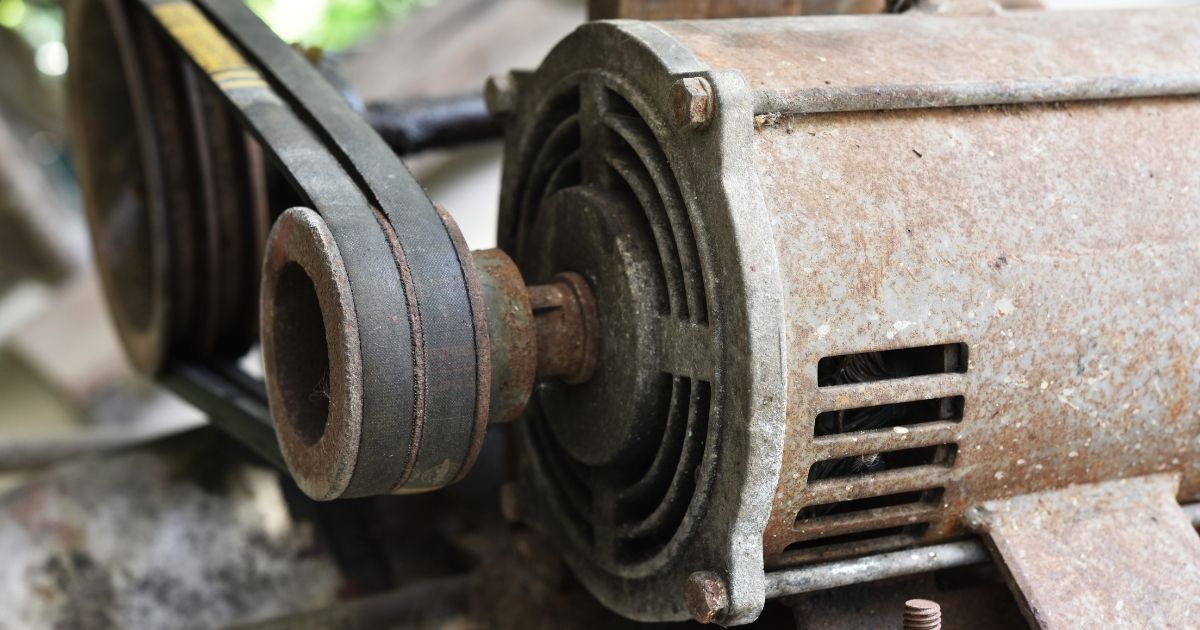
The pulley ratio is all about size—and no, it’s not just for show. The relationship between your driver pulley (the one doing the hard yakka) and your driven pulley (the one getting powered) decides how fast things spin and how much torque you’ll get.
- Big driven pulley = Slower but stronger
- Small driven pulley = Faster but lighter on the torque
The Magic Formula
Want to know how fast your driven pulley will go? Use this:
Driven Speed (RPM) = Driver Speed (RPM) × (Driver Diameter ÷ Driven Diameter)
Example (Easy as):
If your driver pulley is 10 cm and spins at 1000 RPM:
- Driven Pulley (20 cm): 1000 × (10 ÷ 20) = 500 RPM
- Driven Pulley (5 cm): 1000 × (10 ÷ 5) = 2000 RPM
See? No sweat.
Need Pulleys or Belts?
Skip the runaround and grab what you need from AIMS Industrial. We have a wide range of:
Whatever your project, we’ve got your back.
Learn More
For a deep dive into pulley speed ratios and tips, visit our Pulley Speed Ratio Blog.
There you go—pulley speed ratios, made fun and easy. Now go be a pulley pro!
A Quick Word on Safety
Look, we all love a job well done, but don’t forget to stay safe:
- Always turn off your machine and lock it out before tinkering.
- Keep your belt tension and alignment in check.
- Don’t wear loose clothes or let your hair get too close—trust us.
- Safety guards aren’t optional. Use ’em.
Need an actual human to help? We're Here For You!
We’re your mates in industrial supplies, helping Aussie tradies and businesses get the job done right. From quality parts to expert advice, we’re here to make your life easier.
Reach out to us HERE
People Also Ask — Pulley Speed Ratio
Q: How do I calculate pulley speed ratio?
Pulley speed and diameter are inversely related, captured by the rule that the drive pulley's speed times its diameter equals the driven pulley's speed times its diameter (N1 x D1 = N2 x D2). Rearranged, the driven speed equals the drive speed multiplied by the drive diameter divided by the driven diameter. So a small pulley driving a large one slows the output down, and a large pulley driving a small one speeds it up. To find any one value you need the other three. This simple relationship lets you size pulleys to hit a target output speed without trial and error.
Q: If I want to slow a driven shaft down, which pulley do I change?
To slow the driven shaft, you want the driven pulley to be larger than the drive pulley — or you make the drive pulley smaller. Because speed is inversely proportional to diameter, fitting a bigger pulley on the driven shaft reduces its speed, while fitting a smaller pulley on the driving (motor) shaft does the same. For example, doubling the driven pulley diameter relative to the drive pulley roughly halves the output speed. The reverse is true to speed things up. Working out the exact ratio with the N1 x D1 = N2 x D2 rule tells you the diameters you need to reach the speed you want.
Q: Does pulley ratio affect torque as well as speed?
Yes — speed and torque trade off through the same ratio. When a pulley arrangement reduces output speed, it increases the torque available at the output by roughly the same factor (less small losses), and when it increases speed it reduces torque. This is why a drive that gears down to run slower also delivers more turning force, which is often exactly what heavily loaded equipment needs. So when you select a pulley ratio you are choosing a balance: more speed and less torque, or less speed and more torque. Knowing the load's torque demand as well as its speed is key to picking the right ratio.
Q: What is the difference between pitch diameter and outside diameter?
The outside diameter is the measurement across the outer edge of the pulley, while the pitch diameter is the effective diameter at the point where the belt actually grips and transmits power — slightly inside the rim for a V-pulley. Speed-ratio calculations should use pitch diameters, because that is where the belt's effective contact occurs, so using outside diameters introduces a small error. For rough estimates outside diameter is close enough, but for accurate speed and ratio work, use the pitch diameters quoted for the pulleys. The difference is small on large pulleys but more significant on small ones.
Q: Why does my actual output speed differ slightly from the calculation?
Small differences come mainly from belt slip and from using outside rather than pitch diameter. A V-belt grips by wedging into the pulley groove, but there is always a little slip under load, so the real output runs marginally below the calculated figure — and a loose, worn or glazed belt slips more. Using outside diameter instead of pitch diameter also shifts the result slightly. For most drives these effects are minor, but if the output speed matters precisely, calculate with pitch diameters, keep the belt correctly tensioned, and expect a small reduction from slip. Where exact speed is essential, a variable speed drive removes the guesswork.


