

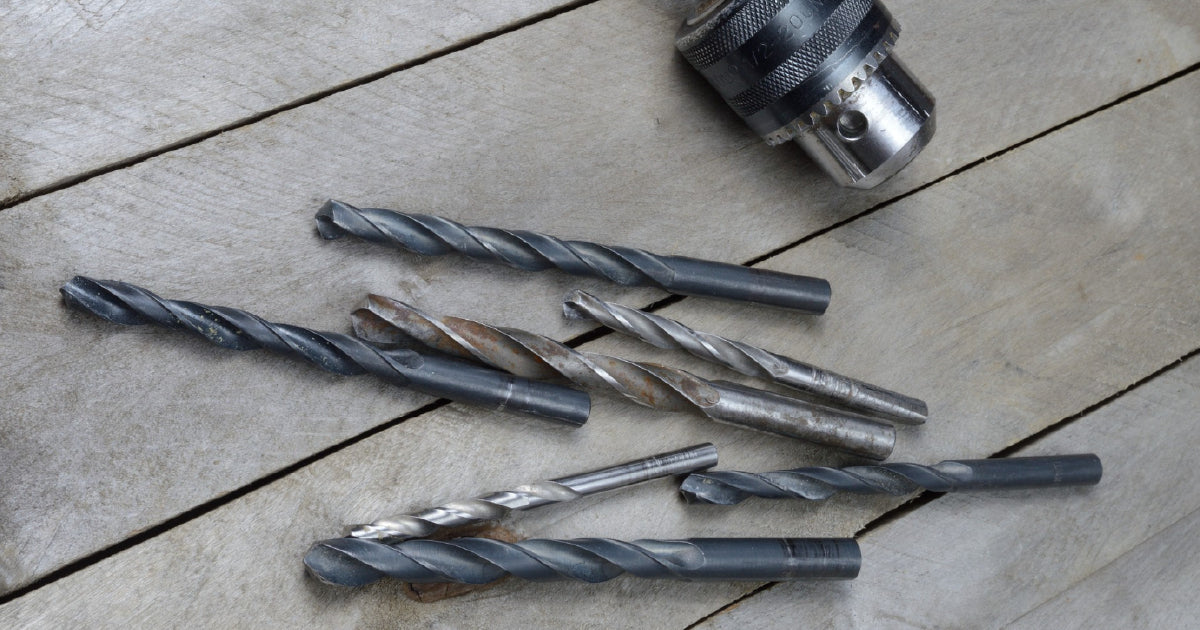
Tap drill size is the diameter of the pilot hole drilled before threading. The rule: drill diameter = thread outer diameter − thread pitch. For M8 × 1.25 coarse, the tap drill is 6.8mm. For 1/4" BSP, it's 11.8mm. The compact reference below covers the most-used metric coarse sizes; full metric fine, BSP, UNC and UNF charts are further down.

(If you are looking for the Sutton Tap & Drill Chart PDF, click here.)
Quick answer — most common sizes
Metric coarse: M3 = 2.5mm · M4 = 3.3mm · M5 = 4.2mm · M6 = 5.0mm · M8 = 6.8mm · M10 = 8.5mm · M12 = 10.2mm · M14 = 12.0mm · M16 = 14.0mm · M20 = 17.5mm
BSP: 1/8" = 8.8mm · 1/4" = 11.8mm · 3/8" = 15.0mm · 1/2" = 18.6mm
UNC: 1/4"-20 = 5.1mm · 5/16"-18 = 6.9mm · 3/8"-16 = 7.9mm · 1/2"-13 = 10.7mm
Formula: tap drill (mm) = thread OD − pitch. Full charts below.
For more engineering reference charts and selection tables, see our Engineering Reference Charts hub — covering fasteners, bearings, lubrication, measuring, welding and Australian standards.
Tap & Drill Bit Selector — Most-Asked Metric Sizes
This page is a working selector tool — not just a reference. Use it to get the right tap and drill into your hand in one click. The 10 most-asked metric thread sizes at AIMS are below. For less common sizes, scroll to the full charts further down (use the jump-nav below).
Default recommendation: Sutton Spiral Point HSS taps and Sutton D101 Silver Bullet HSS jobber drills — the workshop standard for mild steel. AIMS also stocks Bordo and P&N as alternates. For stainless steel or hardened steel, switch to cobalt drill bits + cobalt taps (see the "By Material" section below). Need help? Call us on (02) 9773 0122.
Tap Drill Size Chart — Metric Coarse Quick Reference
The most frequently used metric coarse thread sizes and their tap drill diameters:
| Thread | Tap Drill (mm) | Thread | Tap Drill (mm) |
| M3 | 2.5 | M12 | 10.2 |
| M4 | 3.3 | M14 | 12.0 |
| M5 | 4.2 | M16 | 14.0 |
| M6 | 5.0 | M18 | 15.5 |
| M8 | 6.8 | M20 | 17.5 |
| M10 | 8.5 | M24 | 21.0 |
How to Use This Chart
Tap drill size refers to the diameter of the hole you drill before running a tap through it. The hole must be smaller than the thread's outer diameter, leaving enough material for the tap to cut the thread profile. Too large and the thread is shallow and weak. Too small and you risk breaking the tap.

As a general rule, tap drill size = thread outer diameter − thread pitch. This gives approximately 75% thread engagement, which is standard for most applications. For softer materials or where tap breakage is a concern, go slightly larger. For maximum thread strength in hard materials, go slightly smaller.
By accurately matching the tap size to the drill size and choosing the right tap for the job, you can achieve optimal results in your thread cutting operations.
Where a bolt or screw passes through a hole rather than being tapped into it, you need a clearance hole instead — sized so the fastener slides through freely rather than cutting a thread. The metric tables below include a Clearance Hole (mm) column for this, based on the ISO 273 normal (medium) fit for the diameters most commonly used in through-bolt assembly. A dash (—) marks sizes that fall outside the standard clearance-hole table — generally uncommon "second choice" diameters rarely used for through-bolt work.
Metric Coarse Tap Drill Size Chart
Metric coarse is the standard thread series for most bolts, screws and tapped holes in general engineering. Pitch is expressed in millimetres — a lower number means finer threads. These are the sizes you'll use for the vast majority of metric tapping work.
Need help finding your size? Call AIMS on (02) 9773 0122 — the team can confirm stock and pick the right tap type for your job. Or browse all metric coarse taps and jobber drill bits.
| Thread Size | Pitch (mm) | Tap Drill (mm) | Tap Drill (inch approx.) | Clearance Hole (mm) |
| M1 | 0.25 | 0.75 | --- | — |
| M1.2 | 0.25 | 0.95 | --- | — |
| M1.4 | 0.30 | 1.10 | --- | — |
| M1.6 | 0.35 | 1.25 | --- | 1.8 |
| M1.8 | 0.35 | 1.45 | --- | — |
| M2 | 0.40 | 1.60 | 1/16" | 2.4 |
| M2.5 | 0.45 | 2.05 | 5/64" | 2.9 |
| M3 | 0.50 | 2.50 | 3/32" | 3.4 |
| M3.5 | 0.60 | 2.90 | 7/64" | — |
| M4 | 0.70 | 3.30 | 1/8" | 4.5 |
| M5 | 0.80 | 4.20 | 11/64" | 5.5 |
| M6 | 1.00 | 5.00 | 13/64" | 6.6 |
| M7 | 1.00 | 6.00 | 15/64" | — |
| M8 | 1.25 | 6.80 | 17/64" | 9.0 |
| M10 | 1.50 | 8.50 | 21/64" | 11.0 |
| M12 | 1.75 | 10.20 | 25/64" | 13.5 |
| M14 | 2.00 | 12.00 | 15/32" | 15.5 |
| M16 | 2.00 | 14.00 | 35/64" | 17.5 |
| M18 | 2.50 | 15.50 | 39/64" | — |
| M20 | 2.50 | 17.50 | 11/16" | 22.0 |
| M22 | 2.50 | 19.50 | 49/64" | — |
| M24 | 3.00 | 21.00 | 53/64" | 26.0 |
| M27 | 3.00 | 24.00 | 15/16" | — |
| M30 | 3.50 | 26.50 | 1-3/64" | 33.0 |
| M33 | 3.50 | 29.50 | 1-5/32" | — |
| M36 | 4.00 | 32.00 | 1-17/64" | 39.0 |
| M39 | 4.00 | 35.00 | 1-3/8" | — |
| M42 | 4.50 | 37.50 | 1-15/32" | 45.0 |
| M45 | 4.50 | 40.50 | 1-19/32" | — |
| M48 | 5.00 | 43.00 | 1-11/16" | 52.0 |
Metric Fine Tap Drill Size Chart
Metric fine threads are used where vibration resistance, fine adjustment, or higher tensile strength is required — common in automotive, aerospace, and precision engineering applications. Multiple pitches exist per diameter; confirm your pitch before selecting the drill.
Need help finding your size? Call AIMS on (02) 9773 0122 — the team can confirm stock and pick the right tap type for your job. Or browse all metric fine taps and jobber drill bits.
| Thread Size | Pitch (mm) | Tap Drill (mm) | Clearance Hole (mm) |
| M1 × 0.2 | 0.20 | 0.80 | — |
| M1.2 × 0.2 | 0.20 | 1.00 | — |
| M1.4 × 0.2 | 0.20 | 1.20 | — |
| M1.6 × 0.2 | 0.20 | 1.40 | 1.8 |
| M2 × 0.25 | 0.25 | 1.75 | 2.4 |
| M2.5 × 0.35 | 0.35 | 2.15 | 2.9 |
| M3 × 0.35 | 0.35 | 2.65 | 3.4 |
| M3.5 × 0.35 | 0.35 | 3.15 | — |
| M4 × 0.5 | 0.50 | 3.50 | 4.5 |
| M5 × 0.5 | 0.50 | 4.50 | 5.5 |
| M6 × 0.75 | 0.75 | 5.25 | 6.6 |
| M7 × 0.75 | 0.75 | 6.25 | — |
| M8 × 0.75 | 0.75 | 7.25 | 9.0 |
| M8 × 1.0 | 1.00 | 7.00 | 9.0 |
| M10 × 0.75 | 0.75 | 9.25 | 11.0 |
| M10 × 1.0 | 1.00 | 9.00 | 11.0 |
| M10 × 1.25 | 1.25 | 8.75 | 11.0 |
| M12 × 1.0 | 1.00 | 11.00 | 13.5 |
| M12 × 1.25 | 1.25 | 10.75 | 13.5 |
| M12 × 1.5 | 1.50 | 10.50 | 13.5 |
| M14 × 1.0 | 1.00 | 13.00 | 15.5 |
| M14 × 1.25 | 1.25 | 12.75 | 15.5 |
| M14 × 1.5 | 1.50 | 12.50 | 15.5 |
| M16 × 1.0 | 1.00 | 15.00 | 17.5 |
| M16 × 1.5 | 1.50 | 14.50 | 17.5 |
| M18 × 1.5 | 1.50 | 16.50 | — |
| M18 × 2.0 | 2.00 | 16.00 | — |
| M20 × 1.5 | 1.50 | 18.50 | 22.0 |
| M20 × 2.0 | 2.00 | 18.00 | 22.0 |
| M22 × 1.5 | 1.50 | 20.50 | — |
| M22 × 2.0 | 2.00 | 20.00 | — |
| M24 × 1.5 | 1.50 | 22.50 | 26.0 |
| M24 × 2.0 | 2.00 | 22.00 | 26.0 |
| M27 × 2.0 | 2.00 | 25.00 | — |
| M30 × 1.5 | 1.50 | 28.50 | 33.0 |
| M30 × 2.0 | 2.00 | 28.00 | 33.0 |
| M33 × 2.0 | 2.00 | 31.00 | — |
| M36 × 1.5 | 1.50 | 34.50 | 39.0 |
| M36 × 3.0 | 3.00 | 33.00 | 39.0 |
Tap & Drill Selection by Material
The right tap drill diameter is one half of the job. The other half is choosing tap and drill geometry that match your workpiece material. This is where most beginner tappers come unstuck — wrong tap type for the material means broken taps, oversized threads, or torn surface finishes.
Here's what the AIMS workshop crew reaches for, by material:
Mild steel (most common workshop material)
Drill: Sutton D101 Silver Bullet HSS jobber (bright finish, 118° point) for occasional tapping. Sutton D102 Blue Bullet HSS (steam-oxide finish) for production tapping — the steam oxide finish helps swarf release on steel.
Tap: Sutton Spiral Point HSS taps (T1xx series) for through holes — fastest, swarf pushes ahead of the tap. For blind holes, switch to Spiral Flute (T2xx series) so swarf evacuates upward and out of the hole.
Lubricant: Tap Magic Original or any general-purpose cutting fluid.
Stainless steel (304, 316, 17-4 PH)
Drill: Cobalt drill bit — Sutton D108 or D109 cobalt jobber. The 5% to 8% cobalt content lets the drill stay sharp through stainless's work-hardening tendency. HSS bright drills will glaze the hole surface, work-harden the steel, and snap on the next pass.
Tap: Cobalt steel tap — Sutton Spiral Flute Premium HSS Cobalt or Sutton Premium HSS Tinite-coated. The cobalt grade survives the harder material; cheap HSS chrome taps will snap on the first thread.
Lubricant: Tap Magic for Stainless Steel — specifically formulated. Don't skimp here.
Aluminium, brass, copper, plastics
Drill: Standard HSS Sutton D101 Silver Bullet is fine. Some users prefer a slightly higher helix angle drill for softer non-ferrous materials — Sutton's 130° or 140° point geometry options.
Tap: Spiral Flute tap is excellent here — long stringy chips need to evacuate cleanly, and spiral flute pulls them up and out. Avoid spiral point in soft aluminium (it bunches chips inside the hole).
Lubricant: Tap Magic Aluminium variant — formulated to prevent the gummy build-up that aluminium causes on standard cutting fluids.
Cast iron (grey, ductile, malleable)
Drill: HSS Sutton D102 Blue Bullet (steam-oxide). Cast iron is brittle and abrasive — the steam oxide finish helps prolong drill life.
Tap: Straight Flute tap (T4xx series) or hand tap. Cast iron breaks into powder rather than chips, so spiral evacuation isn't needed — straight flute is more rigid and handles the abrasiveness better.
Lubricant: Generally tapped DRY — no cutting fluid needed for cast iron because chips are powder, not strings.
Hardened steel (above ~30 HRC)
For anything above mild steel hardness — pre-hardened tool steels, heat-treated parts, hardfaced surfaces — call AIMS before you start drilling. Solid carbide drills + thread mills are the right answer here, not standard taps. Contact us or call (02) 9773 0122 — we'll save you broken taps and damaged workpieces.
The AIMS workshop rule: The right cutting fluid is worth more than the right tap. Even a premium Sutton tap will fail prematurely if you're tapping stainless without proper lubrication. Tap Magic cutting fluid guide covers which formulation matches your material.
BSP Tap Drill Size Chart (British Standard Pipe)
BSP threads are used on pipe fittings, hydraulic connections, and pneumatic systems throughout Australia and the UK. Sizes refer to the nominal bore of the pipe — not the actual thread diameter, which is always larger. BSPP (parallel) and BSPT (taper) share the same thread form and the same tap drill size.
Need help finding your size? Call AIMS on (02) 9773 0122 — the team can confirm stock and pick the right tap type for your job. Or browse all BSP taps and jobber drill bits.
| Nominal Size | TPI | Tap Drill (mm) | Tap Drill (inch) |
| 1/16" BSP | 28 | 6.6 | 0.261" |
| 1/8" BSP | 28 | 8.8 | 0.347" |
| 1/4" BSP | 19 | 11.8 | 0.465" |
| 3/8" BSP | 19 | 15.0 | 0.590" |
| 1/2" BSP | 14 | 18.6 | 0.733" |
| 3/4" BSP | 14 | 24.3 | 0.956" |
| 1" BSP | 11 | 30.5 | 1.200" |
| 1¼" BSP | 11 | 39.2 | 1.544" |
| 1½" BSP | 11 | 45.1 | 1.776" |
| 2" BSP | 11 | 57.0 | 2.245" |
| 2½" BSP | 11 | 72.6 | 2.858" |
| 3" BSP | 11 | 87.8 | 3.457" |
The 1/4" BSP tap drill size (11.8mm) is one of the most commonly referenced in Australian trade and industrial work. If you're unsure whether your fitting is BSPP or BSPT, the tap drill size is the same for both — the distinction only matters when selecting the tap itself.
UNC Tap Drill Size Chart (Unified National Coarse)
UNC is the standard US coarse thread series. Common in imported machinery, agricultural equipment, and items manufactured to American standards. Identified by thread count in threads per inch (TPI).
Need help finding your size? Call AIMS on (02) 9773 0122 — the team can confirm stock and pick the right tap type for your job. Or browse all UNC taps and jobber drill bits.
| Thread | TPI | Tap Drill (mm) | Tap Drill (fractional inch) |
| #4-40 | 40 | 2.4 | 3/32" |
| #5-40 | 40 | 2.65 | --- |
| #6-32 | 32 | 2.8 | 7/64" |
| #8-32 | 32 | 3.5 | 9/64" |
| #10-24 | 24 | 3.9 | 5/32" |
| 1/4"-20 | 20 | 5.1 | 13/64" |
| 5/16"-18 | 18 | 6.9 | 17/64" |
| 3/8"-16 | 16 | 7.9 | 5/16" |
| 7/16"-14 | 14 | 9.4 | 3/8" |
| 1/2"-13 | 13 | 10.7 | 27/64" |
| 9/16"-12 | 12 | 12.3 | 31/64" |
| 5/8"-11 | 11 | 13.5 | 17/32" |
| 3/4"-10 | 10 | 16.7 | 21/32" |
| 7/8"-9 | 9 | 19.4 | 49/64" |
| 1"-8 | 8 | 22.2 | 7/8" |
| 1-1/8"-7 | 7 | 25.4 | 1" |
| 1-1/4"-7 | 7 | 28.6 | 1-1/8" |
| 1-3/8"-6 | 6 | 31.0 | 1-7/32" |
| 1-1/2"-6 | 6 | 34.1 | 1-11/32" |
UNF Tap Drill Size Chart (Unified National Fine)
UNF has a finer pitch than UNC — more threads per inch, higher tensile strength, and better vibration resistance. Used in aerospace, precision equipment, and anywhere a finer thread is specified. When in doubt, check the thread count: more threads per inch means UNF.
Need help finding your size? Call AIMS on (02) 9773 0122 — the team can confirm stock and pick the right tap type for your job. Or browse all UNF taps and jobber drill bits.
| Thread | TPI | Tap Drill (mm) | Tap Drill (fractional inch) |
| #4-48 | 48 | 2.3 | 3/32" |
| #6-40 | 40 | 2.9 | 7/64" |
| #8-36 | 36 | 3.5 | 9/64" |
| #10-32 | 32 | 3.8 | 9/64" |
| 1/4"-28 | 28 | 5.6 | 7/32" |
| 5/16"-24 | 24 | 6.9 | 17/64" |
| 3/8"-24 | 24 | 8.5 | 21/64" |
| 7/16"-20 | 20 | 9.9 | 25/64" |
| 1/2"-20 | 20 | 11.5 | 29/64" |
| 9/16"-18 | 18 | 13.1 | 33/64" |
| 5/8"-18 | 18 | 14.7 | 37/64" |
| 3/4"-16 | 16 | 17.5 | 11/16" |
| 7/8"-14 | 14 | 20.6 | 13/16" |
| 1"-12 | 12 | 23.4 | 59/64" |
| 1-1/8"-12 | 12 | 26.6 | 1-3/64" |
| 1-1/4"-12 | 12 | 29.8 | 1-3/16" |
| 1-3/8"-12 | 12 | 33.0 | 1-5/16" |
| 1-1/2"-12 | 12 | 36.5 | 1-7/16" |
Related AIMS Selectors & Guides
This page sits at the centre of AIMS's threading and drilling tool cluster. The related selectors and selection guides below go deeper on the choices around it:
- Tap & Die Selection Guide — what tap type for which material, hole type, and machine
- Drill Bit Selection Guide — HSS vs cobalt vs carbide, jobber vs stub vs reduced shank
- Cutting Speeds & Feeds Reference — Vc and feed rate by material and tool type
- Cutting Tool Materials — HSS, cobalt, carbide, PCBN, PCD compared
- Cutting Tool Coatings — TiN, TiAlN, AlCrN, when each matters
- Cutting Tool Troubleshooting — broken taps, walking drills, poor finish, oversize holes
- Metric / Imperial / Gauge Conversion Master Chart — full drill bit + thread size cross-reference
- Thread Standards: BSP vs NPT vs UNC — identify the thread system you're dealing with
Or browse the full taps range + jobber drill bits + cobalt drill bits — Sutton primary stock, Bordo and P&N alternates, specialty brands available for next-day Australia-wide dispatch from our Milperra warehouse.
Frequently Asked Questions
What drill size for M3 tap?
For M3 coarse thread (0.5mm pitch), use a 2.5mm tap drill. For M3 fine (0.35mm pitch), use a 2.65mm drill. Formula: 3 − 0.5 = 2.5mm.
What drill size for M4 tap?
For M4 coarse thread (0.7mm pitch), use a 3.3mm tap drill. For M4 fine (0.5mm pitch), use a 3.5mm drill. Formula: 4 − 0.7 = 3.3mm.
What drill size for M5 tap?
For M5 coarse thread (0.8mm pitch), use a 4.2mm tap drill. For M5 fine (0.5mm pitch), use a 4.5mm drill. Formula: 5 − 0.8 = 4.2mm.
What drill size for M6 tap?
For M6 coarse thread (1.0mm pitch), use a 5.0mm tap drill. For M6 fine (0.75mm pitch), use a 5.25mm drill. Formula: 6 − 1.0 = 5.0mm.
What drill size for M8 tap?
For M8 coarse thread (1.25mm pitch), use a 6.8mm tap drill. For M8 fine (1.0mm pitch), use a 7.0mm drill. Formula: 8 − 1.25 = 6.75mm, rounded to 6.8mm.
What drill size for M10 tap?
For M10 coarse thread (1.5mm pitch), use an 8.5mm tap drill. For M10 fine (1.25mm pitch), use 8.75mm; for M10 fine (1.0mm pitch), use 9.0mm. Formula: 10 − 1.5 = 8.5mm.
What drill size for M12 tap?
For M12 coarse thread (1.75mm pitch), use a 10.2mm tap drill. For M12 fine (1.5mm pitch), use 10.5mm; for M12 fine (1.25mm pitch), use 10.75mm. Formula: 12 − 1.75 = 10.25mm, rounded to 10.2mm.
What drill size for M14 tap?
For M14 coarse thread (2.0mm pitch), use a 12.0mm tap drill. For M14 fine (1.5mm pitch), use 12.5mm. Formula: 14 − 2.0 = 12.0mm.
What drill size for M16 tap?
For M16 coarse thread (2.0mm pitch), use a 14.0mm tap drill. For M16 fine (1.5mm pitch), use 14.5mm. Formula: 16 − 2.0 = 14.0mm.
What drill size for M20 tap?
For M20 coarse thread (2.5mm pitch), use a 17.5mm tap drill. For M20 fine (2.0mm pitch), use 18.0mm; for M20 fine (1.5mm pitch), use 18.5mm. Formula: 20 − 2.5 = 17.5mm.
What drill size for 1/4 inch BSP tap?
The recommended tap drill for 1/4 inch BSP (19 TPI) is 11.8mm, or 0.465 inches. This applies to both BSPP (parallel) and BSPT (taper) threads — the tap drill is the same.
What drill size for 1/8 inch NPT tap?
The recommended tap drill for 1/8 inch NPT (27 TPI) is 8.6mm, or 21/64 inch. NPT is a tapered thread used on American pipe fittings — distinct from BSP.
What drill size for 1/4 inch UNC tap?
For 1/4-20 UNC, use a 5.1mm tap drill (13/64 inch). UNC has 20 threads per inch and is the standard US coarse thread.
How do I calculate tap drill size for metric threads?
Tap drill size (mm) equals thread diameter minus thread pitch. Example: M10 × 1.5 = 10 − 1.5 = 8.5mm. This gives approximately 75% thread engagement, which is standard for most applications.
What is a tap drill size?
A tap drill size is the diameter of the hole you drill before cutting a thread with a tap. It must be smaller than the thread's outer diameter so the tap has material to cut the thread profile into.
What is the difference between BSPP and BSPT?
BSPP (British Standard Pipe Parallel) has straight threads and seals with an O-ring or washer. BSPT (British Standard Pipe Taper) has a tapered thread that seals as it tightens. Both share the same tap drill size for a given nominal size, but BSPT taps are designed to cut a taper.
If a tap breaks during the threading process, see our guide on how to remove a broken tap — covering all six removal methods from tap extractors through to EDM.
Ready to tap?
Shop our full range of taps, dies & threading tools
From metric hand taps to imperial die sets — AIMS Industrial stocks threading tools for every standard, ready to ship Australia-wide.
For the tap type that matches your hole and material, see our Tap Types Explained guide. For choosing the right cutting fluid for your material, see our Tap Magic cutting fluid guide.
Need to identify a thread standard? Our Thread Standards Guide covers BSP, NPT, UNC, UNF, BSW and metric with identification tips.
People Also Ask — Tap Drill Size Chart: Metric & Imperial Thread Sizes
Q: What drill size do I use for an M10 tap?
For M10 × 1.5 coarse thread, use an 8.5 mm pilot drill. For M10 × 1.25 fine thread, use a 8.75 mm drill (often rounded to 9.0 mm in practice). Using the correct pilot hole is critical — too small risks tap breakage; too large produces insufficient thread engagement and weak joints.
Q: What is the difference between a taper tap and a plug tap?
A taper tap has a long chamfer (8–10 threads) that guides it into the hole gradually — best for starting threads in blind or through holes. A plug tap (4–5 thread chamfer) picks up where the taper left off and is the most common general-purpose tap. A bottoming tap has just 1–2 threads of chamfer for cutting threads to the very bottom of a blind hole.
Q: What is the difference between BSP and NPT threads?
BSP (British Standard Pipe) uses a 55° thread angle and is the standard for most Australian, British, and European hydraulic and pneumatic fittings. NPT (National Pipe Taper) uses a 60° thread angle and is common on American equipment. The two are not interchangeable — mismatching causes leaks and can damage fittings even if they appear to thread together.
Q: How do I know which tap size to buy?
Match the tap to the bolt thread you need — an M6 × 1.0 tap cuts the thread for an M6 coarse bolt. Always pair taps with the correct pilot drill from a tap drill chart. For blind holes, buy a taper, plug, and bottoming tap set. For through holes, a plug tap alone is usually sufficient for most trade applications.
For machining, see our machining range stocked across Australia.
Looking for long drill bits? Our long drill bits range covers the common sizes and brands.
Prefer an interactive lookup? Use the AIMS Tap & Drill Selector tool to get the right tap and drill by thread type, size and material.