

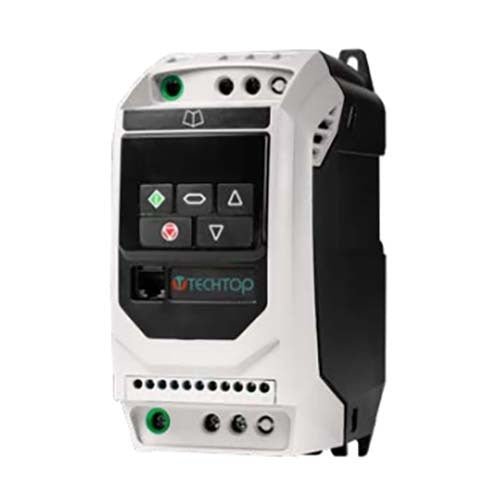
Quick answer: There's no fixed kW cut-off that tells you which starting method to use — despite what a lot of guides imply. The real decision comes down to three things: how strong your supply is, how often the motor starts, and whether you actually need variable speed. If you need speed control, it's a VFD. If you don't, and your supply and starting frequency can handle it, DOL or star-delta will do the job at a fraction of the cost. A soft starter sits in between — smoother than star-delta, cheaper than a VFD, and often the safest default when you're not sure.
In 30 seconds
- Four real methods: DOL, star-delta, soft starter, VFD — starting current drops and cost rises as you move down that list.
- No universal kW rule: what's "too big for DOL" depends on your specific supply and site rules, not a fixed number — anyone who tells you a single cut-off applies everywhere is oversimplifying.
- Star-delta has a hidden risk: the switch from star to delta creates a current and torque spike that's hard enough on some motors to shear a shaft on larger sizes.
- Only pay for a VFD if you need speed control — if the motor just needs to run at one speed, a soft starter does the gentle-start job for less.
- Use the tool below to get a starting-point recommendation for your own motor in under a minute.
The four methods, in plain terms
Direct-On-Line (DOL): a contactor connects the motor straight to full mains voltage. Simple, cheap, and the most robust option mechanically — there's nothing to tune or fail except the contactor itself. The trade-off is the highest starting current of the four, typically 6–8 times the motor's full-load amps (FLA), for a second or two while it comes up to speed.
Star-Delta (Y-Δ): the motor starts in a reduced-voltage "star" configuration, then a second contactor switches it to full-voltage "delta" once it's near running speed. This needs a motor wound for star-delta operation (six leads, not three). It cuts starting current to roughly 2.0–2.7 times FLA — a real improvement over DOL — but the transition between star and delta isn't seamless. That switching moment causes a brief current and torque spike, which is the trade-off most guides don't mention (more on this below).
Soft starter: an electronic (thyristor/SCR-based) unit that ramps voltage up gradually instead of switching it in one step. No mechanical transition, no separate winding requirement, and current is typically 2.0–4.0 times FLA depending on how it's configured. Once the motor's up to speed, most soft starters bypass into a direct connection — they don't control speed, only the start.
Variable Frequency Drive (VFD): converts incoming AC to DC, then back to AC at a controlled, variable frequency — which means it controls the motor's speed continuously, not just its start. This gives the gentlest start of the four (typically 1.0–1.5 times FLA) and the only genuine speed control. It's also the most expensive and the most complex to install (expect to think about electromagnetic compatibility and harmonics, not just bolt it in).
Starting current comparison
| Method | Typical starting current | Speed control? | Relative cost |
|---|---|---|---|
| DOL | 6–8× FLA | No | Lowest |
| Star-Delta | 2.0–2.7× FLA | No | Low–moderate |
| Soft starter | 2.0–4.0× FLA (adjustable) | No | Moderate |
| VFD | 1.0–1.5× FLA | Yes, continuous | Highest |
These are planning ranges, not guarantees for your specific motor — actual figures depend on the motor's own design and the starter's settings. Where it matters (large motors, weak supplies, life-safety-adjacent equipment), get it calculated for your exact setup rather than working off general figures like these.
So which one do I actually need?
This is the question we see asked constantly, and the honest answer is: it depends, and anyone giving you a flat "under 7.5kW use DOL, over that use star-delta" rule is oversimplifying. Electrical forums full of working engineers repeatedly land on the same conclusion — there's no single universal threshold, because the real constraints are local:
- How strong is your supply? A motor that starts fine DOL on a robust urban three-phase connection might cause an unacceptable voltage dip on a long rural line or a generator-fed supply. This is a site-specific electrical calculation, not a rule of thumb. If you're specifying the generator itself, our generator sizing guide covers working out the supply's actual capacity.
- How often does it start? A motor that starts once a day tolerates a harder start than one cycling on and off dozens of times a shift — repeated hard starts add up as thermal and mechanical stress, whichever method you use.
- What's the mechanical load like? Conveyors, compressors and some pumps are more sensitive to a hard or uneven start than others. This affects the case for a soft starter or VFD even when the electrical supply could technically handle DOL.
- Do you actually need variable speed? If the answer is no, a VFD is solving a problem you don't have — at several times the cost of a soft starter that solves the one you do have (a gentle start).
Your network operator (DNSP) may also have its own connection rules limiting how much voltage disturbance a motor start is allowed to cause on their network — this is genuinely site- and supply-specific, so confirm it with your electrician rather than assuming a number from a general guide like this one applies to your connection.
The star-delta risk most guides don't mention
Star-delta looks like a straightforward, cheaper alternative to a soft starter — and often it is. But the transition from star to delta isn't instantaneous or smooth: for a brief moment as the contactors switch over, the motor sees a current and torque spike. On smaller motors this is rarely an issue. On larger motors, it's a genuine mechanical risk — it's widely discussed in electrical engineering circles that this transition spike has been serious enough in documented cases to shear a motor shaft outright, not just cause electrical stress. If you're specifying star-delta for anything beyond a modest motor size, this transition risk is exactly the kind of thing to raise with whoever's designing the system, and it's the main reason a soft starter is often preferred over star-delta once motors get larger, even though star-delta looks cheaper on paper.
What actually goes wrong on site — real cases from the trade
The theory above is straightforward enough on paper. What actually trips people up is what happens once it's installed. A few recurring problems, reported directly by electricians and engineers working on this equipment, are worth knowing before you specify anything:
Star-delta contactors welding shut on the changeover. This is a documented, repeat-offender fault: the star and delta contactors briefly overlap during the switchover — or the timing relay controlling that switch drifts out of its correct window — and the resulting near-short-circuit welds the contacts together, tripping the whole board. The fix usually isn't "better" hardware, it's a correctly set transition timer tuned to your actual motor's run-up time (not left on a factory default) plus a proper mechanical interlock between the star and delta contactors. It's also a real argument for a soft starter or VFD on anything where board downtime is expensive — there's no equivalent mechanical transition to get wrong.
"Just use DOL under X kW" rules don't hold up in practice. Electricians on industry forums consistently push back on any fixed kW cut-off. Some cite a rough industry convention of reduced-voltage starting above roughly 5.5kW on a 400V supply, but describe it themselves as a crude rule of thumb, not a real design calculation. What actually matters is the voltage dip your specific starting current causes on your specific supply, which depends on that supply's fault level and impedance — not a number that transfers from one site to another.
Two motors starting together changes everything. A constraint that's easy to miss on paper: if your site has two or more large motors that could start at or near the same time — a shared standby generator, sequential process equipment, power restoration after an outage — the worst-case starting current is the sum of both, not just your largest single motor. This is exactly the kind of scenario a generic guide can't size for you; it's a reason to get an actual calculation done rather than working off any rule of thumb, including the ones in this guide.
Not every soft starter is actually up to the job. A recurring theme in equipment troubleshooting discussions: a soft starter that's undersized or poorly rated for the real starting current required — particularly for loads that need genuine breakaway torque, like an agitator restarting under a settled or solidified load — simply won't perform, no matter how it's wired or programmed. Engineers dealing with exactly this scenario have generally advised against a VFD here too, on the basis that if you don't need variable speed, it doesn't fix the breakaway-torque problem either — the fix is a properly rated soft starter with an adjustable ramp profile, not a more expensive box. The lesson generalises: buy a soft starter rated for your load's real starting duty, not just the motor's nameplate running current.
Cost and complexity — roughly, not to the dollar
We're deliberately not putting hard dollar figures here, because starter pricing depends heavily on motor size, enclosure rating, and brand, and a specific number would be more misleading than helpful. As a relative guide: DOL is the cheapest and simplest by a wide margin (one contactor, one overload relay). Star-delta costs more in panel hardware (extra contactors, a timer) but doesn't add much in electronics. A soft starter adds real electronics cost but removes a layer of mechanical complexity and switching wear. A VFD costs the most upfront and adds the most installation complexity — cabling, filtering, and sometimes enclosure requirements to manage electrical noise — but it's the only one of the four that also controls speed, which can pay for itself in energy savings on variable-torque loads like fans and pumps.
Worked example: a 15kW workshop compressor on a rural supply
Say you're installing a 15kW three-phase air compressor at a workshop on a rural property, fed by a long supply line rather than a strong urban grid connection, and it'll cycle on and off repeatedly through the day rather than starting once and running continuously. Here's how the decision actually plays out:
- Variable speed needed? No — a compressor like this just needs to run at its rated speed. That rules out a VFD on cost grounds alone, unless you have a separate reason to want speed control (some larger compressor installations do, for capacity modulation, but that's a different conversation).
- Supply strength: a long rural line is exactly the situation where a DOL start's 6–8× FLA current spike is most likely to cause a voltage dip large enough to matter — dimming lights, other equipment browning out, or tripping the connection's own protection.
- Starting frequency: cycling on and off repeatedly through the day rules out star-delta as the preferred option here, since its mechanical switching transition wears the contactors faster under frequent cycling than a soft starter's electronic ramp does.
- Likely answer: a soft starter is the sensible default for this exact combination — weaker supply, frequent starts, no need for speed control. It's not the cheapest of the four options, but it's the one that actually fits the constraints, rather than the one that looks cheapest on a spec sheet.
Change any one of those three factors — a strong urban supply instead of rural, or starting once a day instead of constantly cycling — and the answer could shift back toward star-delta or even DOL. That's exactly why there's no single kW rule: the same 15kW motor can have three different right answers depending on where and how it's actually installed.
Specifying it properly — a checklist before you order anything
- Confirm your supply's fault level and impedance with your electrician or network operator — this is what actually determines whether your starting current is a problem, not the motor's kW alone.
- Check whether more than one large motor could start at the same time on the same supply, and size for that worst case, not just your biggest single motor.
- If you're considering star-delta, confirm the motor is actually wound for it (six leads, not three), and insist on a properly maintained transition timer and mechanical interlock — not a factory-default setting left untouched.
- If you're considering a soft starter, check it's rated for your load's real starting duty — some loads need genuine breakaway torque, not just a gentle ramp — not only the motor's running current.
- If speed control isn't genuinely needed, don't default to a VFD on the assumption it's automatically "the best" option — it's the most expensive of the four for a reason.
- Get the final decision signed off by a licensed electrician against AS/NZS 3000 and your network operator's connection requirements.
Which starting method fits your motor?
Answer four quick questions for a starting-point recommendation. This is a planning guide, not a substitute for a proper site assessment from a licensed electrician — especially for anything above a few kW or on a weak or generator-fed supply.
This is a planning starting point based on the general factors above, not a substitute for a proper electrical assessment of your actual motor, panel and supply.
Learn more →Where AIMS fits
We stock Invertek variable frequency drives directly, single- and three-phase, across a wide kW range — so if a VFD is the right call for your application, that's a genuine, in-stock product, not a referral. We don't stock DOL, star-delta or soft starter hardware as standalone lines, so for those we're glad to talk through your setup and point you in the right direction even where it's not something we sell — that's the whole point of guides like this one. If you're still working out the motor itself, our electric motor selection guide covers that decision in more depth.
Frequently asked questions
What's the cheapest way to start a large motor?
DOL is the cheapest and simplest, but only where your supply is strong enough and your site's connection rules allow the resulting current spike. It's not automatically the right answer just because it's cheapest.
What size motor needs star-delta or a soft starter instead of DOL?
There's no fixed kW threshold. Some quote a rough convention of reduced-voltage starting above about 5.5kW at 400V, but working electricians describe that as a crude rule of thumb, not a real calculation — the actual answer depends on your specific supply strength and network operator's connection rules.
Why do star-delta contactors sometimes weld together during the changeover?
This is a documented, recurring fault: the transition timer drifts or is set incorrectly, so the star and delta contactors briefly overlap and short circuit through the switchover, welding the contacts. It's usually fixed with a correctly tuned transition timer and a proper mechanical interlock, not by simply replacing the contactors again.
Can a star-delta starter damage my motor?
The switch from star to delta causes a brief current and torque spike. On smaller motors it's rarely an issue, but on larger motors this transition has been documented as serious enough to shear a motor shaft — worth raising with your system designer for anything beyond a modest motor size.
I need a strong restart under load (like an agitator on a settled tank) — VFD or soft starter?
Engineers who've dealt with this exact problem generally favour a properly rated soft starter with an adjustable ramp profile over a VFD — if you don't need variable speed, a VFD doesn't solve the breakaway-torque problem either. The key is choosing a soft starter genuinely rated for your load's starting duty, not just the motor's running current.
What's the difference between a soft starter and a VFD?
A soft starter only controls the start — it ramps voltage up smoothly, then runs the motor at full, fixed speed. A VFD controls speed continuously, during starting and while running. If you don't need variable speed, a soft starter does the gentle-start job for less.
Does it matter if more than one motor could start at the same time?
Yes, and it's easy to miss. If two or more large motors on the same supply could start together — after a power restoration, for example — the worst-case starting current is the sum of both, not just your biggest single motor. Get this checked specifically if it applies to your site.
Does a VFD actually save energy?
Where the load is variable-torque (fans, pumps), yes, often significantly, because running at reduced speed cuts power consumption disproportionately more than the speed reduction itself. On a fixed, constant-torque load, the energy case is weaker and the main benefit is the gentle start and process control instead.
Who do I ask about starting-current limits for my site?
Your licensed electrician can assess this against AS/NZS 3000 design requirements, and your network operator (DNSP) may have its own connection-specific limits — this is genuinely site-specific, so don't rely on a general figure from any guide, including this one.
Starting current ranges in this guide are general engineering planning figures as at August 2026, cross-checked across multiple independent sources — always confirm against your specific motor and starter manufacturer's data. The site problems and FAQ questions above reflect real, recurring issues and questions raised in electrical engineering forum discussions (including Eng-Tips and Mike Holt's Electrical Forum), not questions we invented ourselves. We could not independently verify a specific AS/NZS 3000 clause or percentage figure for motor-starting voltage dip limits and have deliberately not stated one — confirm site-specific limits with your electrician or network operator.