


(Taken from a post by Beaver Brands. Republished with permission. Edited for point of view and relevance.)
When working in cold environments, manual tasks can lower body and hand temperature making handling and gripping objects more difficult. This can increase the risk of hand and arm grip force reduction, leading to a decrease in blood flow to muscles, thus increasing fatigue and the chance of injury.
Within the workplace, hands are most likely to be affected by cold temperatures. When selecting gloves, consideration must be given to the most appropriate product for the temperature, or the tasks being performed within the environment. Factors such as insulation, fit, flexibility, dexterity, job role and hazard need to be considered.
Keeping warm is a basic need that all of us share. For those who work in cold temperatures and environments, the need to keep their hands warm and protected is of major importance.
Choosing quality hand protection will aid in avoiding potentially serious health risks like frostbite, fatigue, and accidents on the job.
People who work within cold handling and cold environments can be both indoors and outdoors and include industries and occupations such as refrigeration, cold storage, warehousing, logistics, transportation, construction workers, maintenance, mechanical, machine operators, baggage handlers, airplane mechanics, and emergency services personnel - who are often exposed to cold stress.
Lighting can also be compromised in both indoor and outdoor cold temperatures, and some gloves even provide hi-visibility (hi vis) variants to aid in further protection within low light environments.
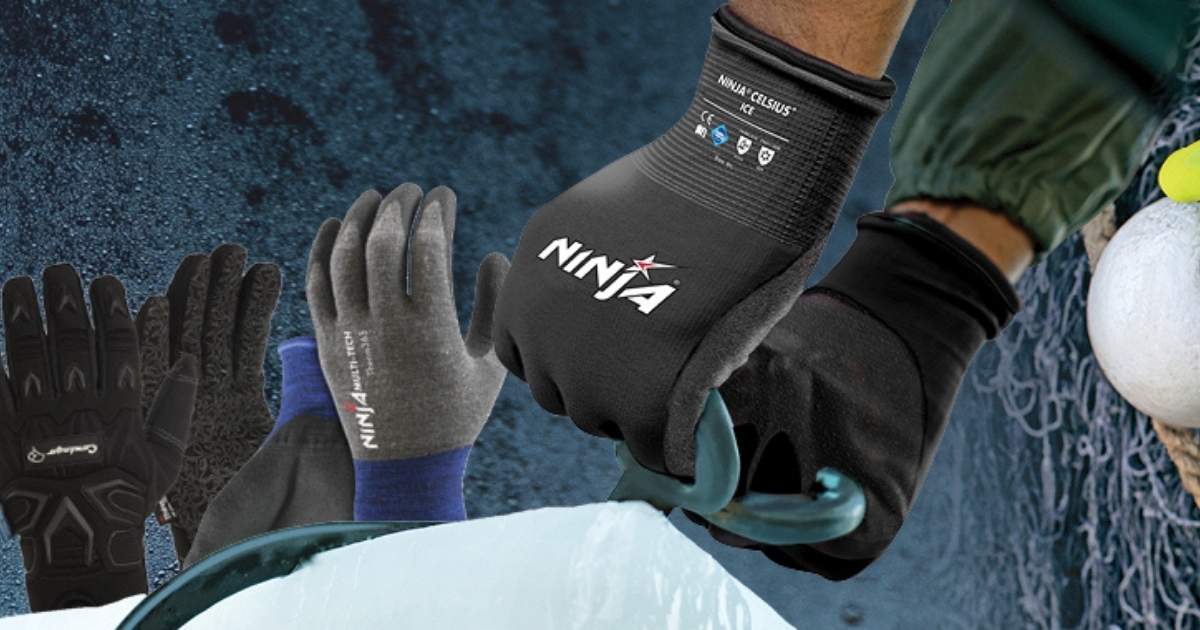
 Ninja Celsius Ice
As their name suggests, this high performance cold-resistant glove not only provides thermal protection, but also liquid resistance and superior grip and dexterity for cold applications.
Ninja Celsius Ice safety features:
- Advanced, proprietary HPT™ (Hydropellent Technology) Coating (on palm and fingertips) keeps the glove soft and flexible in temperatures as low as -20ºC
- Liquid resistant to keep hands comfortable and flexible in cold applications
- Outstanding dexterity and grip even in cold and wet applications, thanks to its non-slip surface
- ThermSmart nylon and acrylic double-knitted liner provides outstanding thermal protection
- Breathe Smart Technology ensures 360º breathability for the hands
- Made with Fit Smart technology to ensure the gloves feel like a "second skin"
- Optional high-visibility (hi-vis) option for low light conditions
You can also consider other cold-resistant, thermal protection gloves from Beaver Brands:
 Ninja Multi-Tech Therm365 (NITHRM365)
- General purpose, 'all year round' glove with HPTTM water-resistant coating and ThermSmart protection
 Contego Chillagoe Cold Wet (COCHLMECH)
- General purpose, all-rounder gloves with a water-resistant barrier and back-of-hand bump protection for non-cut environments
AIMS' Note on Buying PPE and Workwear
- Hazard assessment: Identify the specific hazards you will likely be facing in your work environment. Consider potential risks such as chemical exposure, falling objects, loud noises, electrical hazards or biohazards. This assessment will guide you in selecting the appropriate PPE for the job.
- Appropriate materials: Different materials offer various protective qualities. Consider flame-resistant (FR) materials for fire hazards, chemical-resistant fabrics for handling hazardous liquids and high-visibility options for work in low-light environments.
- Compliance to occupational safety standards: Opt for PPE that meets the pertinent Australia Standard (AS), although some brands -- especially imports -- will have other compliance markings such as ANSI, OSHA, ANSI, NIOSH, oSA etc. Look for certifications on the product label to ensure the equipment has undergone rigorous testing.
- Proper fit and comfort: Proper fit is crucial for both comfort, dexterity and protection. Ill-fitting clothing can snag on machinery or restrict movement, potentially creating additional hazards. Choose sizes that allow for layering in cold weather without being overly bulky and consider adjustable options for items like hard hats or respirators.
- Maintenance and replacement: Inspect PPE before each use for signs of wear, tear or damage. Follow (and factor in) the manufacturer's instructions for cleaning and storage. Some materials may require specialised laundering, while others can be machine-washed. Check for durability to ensure the clothing can withstand frequent use and cleaning. Replace damaged or expired PPE immediately to guarantee your safety.
- Training: Ensure you and any employees understand how to properly use, wear, adjust, maintain and store PPE and workwear. Improper use can negate its protective benefits.


For Australian hard hat standards, colours and AS/NZS 1801 compliance, see our Hard Hat Guide Australia.
People Also Ask — Thermal and Cold-Resistant Gloves
Q: What is the Australian standard for cold-resistant gloves?
Cold-resistant gloves in Australia are assessed under AS/NZS 2161.5, which covers protective gloves against cold environments. The standard specifies test methods for resistance to convective cold (insulation value), contact cold (thermal resistance), water permeability, and dexterity. Performance levels are assigned from 0 (lowest) to 4 (highest) for each property. For general cold store and refrigeration work, a minimum convective cold insulation of Level 2 is typical; for outdoor work in extreme cold or contact with frozen materials, higher insulation and contact cold ratings are required.
Q: What types of thermal gloves are used in industrial cold store environments?
For cold store environments (typically −18°C to −25°C), the most common options are: (1) insulated liner gloves with a waterproof outer shell — provides both thermal protection and moisture resistance for handling wet or icy products; (2) thermal-lined gauntlet gloves for handling of large frozen goods; (3) contact cold rated gloves for handling metal components, pipes, or LPG cylinders which transfer cold rapidly to the hand. Nitrile or neoprene outer shells provide grip on wet or frosted surfaces. Dexterity requirements should be evaluated — heavier insulation reduces grip sensitivity.
Q: Can I use the same thermal gloves for heat protection and cold protection?
No — thermal protection gloves for heat and cold are fundamentally different products and should not be interchanged. Heat-resistant gloves use ceramic fibre, Kevlar, or aluminised fabrics to reflect or resist radiant and convective heat — they are rigid and do not insulate against cold. Cold-resistant gloves use low-conductivity fibres, foam insulation, and vapour barriers to trap body heat. Wearing heat-resistant gloves in cold environments provides inadequate protection; wearing cold-resistant gloves near heat sources can be dangerous as the insulation materials may melt or ignite. Always select PPE matched to the specific thermal hazard.
Q: What gloves are required for handling dry ice or liquid nitrogen?
Handling dry ice (−78.5°C) or liquid nitrogen (−196°C) requires cryogenic gloves rated for extreme cold contact. Standard cold store gloves are inadequate for these temperatures. Cryogenic gloves (such as those with thick leather outers and aluminised or foam insulation) are rated for brief contact with cryogenic liquids and cold surfaces. Crucially, cryogenic gloves must be loose-fitting — if liquid nitrogen splashes inside a tight-fitting glove, it cannot drain away and causes severe cryogenic burns. Consult the product datasheet and a safety specialist before selecting PPE for cryogenic applications.
Q: How do I select thermal gloves for outdoor work in cold and wet conditions?
For outdoor work in cold and wet conditions (e.g., construction, maintenance in winter, utilities), look for gloves that combine: AS/NZS 2161.5 Level 2+ convective cold insulation; a waterproof membrane or outer shell (check for waterproof rating — many thermal gloves are water-resistant, not waterproof); adequate mechanical protection for the grip rating required (AS/NZS 2161.3 cut and abrasion performance); and maintained dexterity for tool handling. Work gloves with a thermal liner and a latex, nitrile, or neoprene coated outer shell are a versatile choice. Replace gloves when the waterproofing or insulation is compromised.
