

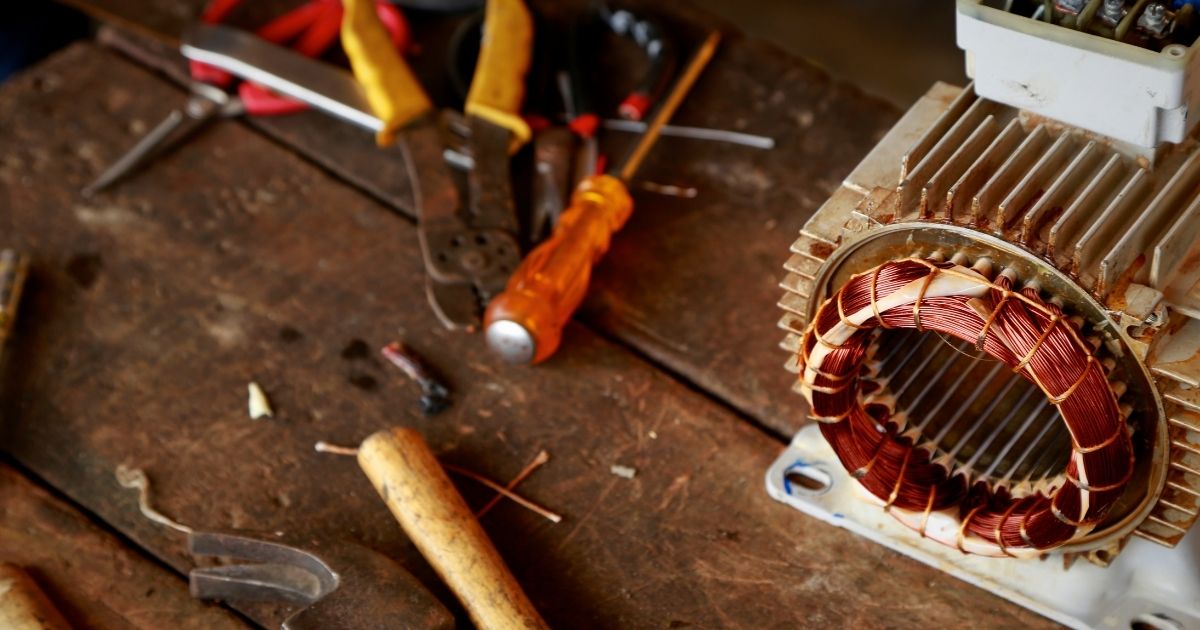

Here are some of the most common causes:
Bearing issues account for around 50% of failures and is the leading cause of motor breakdowns that are often associated with:
- Improper lubrication: Insufficient or wrong type of lubricant can lead to friction and wear.
- Contamination: Dirt, dust or moisture can enter them and cause damage.
- Excessive loads: Applying load greater than what the motor is rated for can put undue stress on them.
- Normal wear and tear: Like any mechanical component, they wear over time and need replacement.
Winding failures typically cause:
- Overheating: This can damage the insulating layer, leading to shorts and ultimately to burnout. Common causes include overload, poor ventilation or blocked cooling passages.
- Voltage spikes or fluctuations: Unstable power supply can harm insulation. Surge protectors and voltage regulators can help prevent this.
- Moisture or contamination: These can degrade insulation and cause malfunctions.
- Abrasion or physical damage: Mechanical impact or foreign objects that enter the motor can damage windings, so ensure your motor has the right ingress protection (IP) rating for your application.
External factors typically caused by:
- Overloading: Operating the motor beyond its rated capacity can lead to overheating and premature failure.
- Vibration: Excessive vibration from unbalanced loads or misalignment can stress components and lead to breakdowns.
- Improper installation: Incorrect mounting or alignment can put undue strain on the motor.
- Immediate environment: Exposure to environments with harsh conditions such as extreme temperatures, dust or corrosive chemicals can accelerate wear and tear of the motor and its components.
Other less common causes:
- Rotor issues: Unbalanced rotors, shaft cracks or excessive magnetic pull can occasionally cause problems.
- Low resistance: Issues like corrosion or overheating can weaken insulation, causing shorts and leaks.
- Voltage imbalance and fluctuation: The former has a more specific effect on multi-phase motors, while the latter can affect all types of motors. We discussed more about them in our other article on electric motor lifespans.
Proper maintenance -- including regular inspections, lubrication and cleaning -- can significantly extend the motor’s lifespan, reduce the risk of breakdowns and consequently help you prevent unplanned downtimes.
Most importantly, make sure you have the right one for the job. We put together a quick guide to help you choose the appropriate electric motor for your application.
It's always wise to follow best practice, consult the manufacturer's recommendations for proper electric motor care and implement proper preventive measures.
AIMS' Note on Safe Use of Belt-Driven Systems
- Power down: Before any inspection, maintenance, or adjustment, make sure to completely shut down the power to the machine and apply a lockout/tagout (LOTO) device to prevent accidental restarts.
- Right belt for the system: Keep in mind that v-belts (especially cogged / notched / wrapped belts) are different from synchronous /timing / ‘toothed’ belts. Some mistake the cogs for teeth but remember that cogged belts run on V-shaped pulleys that do not have teeth. Are you operating where flammable substances are present? Maybe you need fire-resistant anti-static (FRAS) belts – or maybe heat-resistant and oil-resistant belts will do. We compared them in this FAQ.
- Safe attire: Avoid loose clothing, jewelry and long hair that could get caught in the moving parts. Ensure proper fit of workwear without compromising comfort, dexterity and protection. Tie back long hair and secure loose items.
- Safeguards in place: Never operate a belt-driven system with the guards removed or bypassed. These guards are there for your protection.
- Maintenance and replacement: Regularly inspect belts and pulleys for wear and tear. Maintain proper belt tension and alignment as specified by the manufacturer. When replacing the belt, make sure you get the proper fit and measurement of the system. These accessories and maintenance kits (eg alignment tools, belt measurers, pulley gauge sets, spacers, tensioners etc) come in handy.
- Cleanliness: Keep the area around belt drives free of debris and clutter that could get caught or cause a fire hazard.
(Refer to our content library's sub-index of articles about belt-driven systems and electric motors for more information.)


People Also Ask — Electric Motor Breakdown
Q: What are the most common causes of electric motor failure?
Most motor failures trace back to a handful of causes: bearing failure, winding insulation breakdown, overloading, contamination and supply problems. Bearings are the single most common culprit, failing from wear, poor lubrication, misalignment or vibration. Winding insulation degrades from heat, moisture and electrical stress until it shorts. Overloading and frequent starting overheat the motor and shorten its life. Dust, dirt and moisture get into the windings and bearings and accelerate wear. And supply issues such as voltage imbalance or single-phasing put extra heat and stress on the motor. The good news is that most of these are reduced by correct sizing, alignment, lubrication and protection.
Q: Why do motor bearings fail?
Bearings fail mainly from lubrication problems, contamination, misalignment and vibration. Too little grease, too much grease, or the wrong grease all shorten bearing life, as does grease that has aged or been contaminated. Dirt, water and fine particles work into the bearing and abrade the races and balls. Misalignment between the motor and the driven equipment, or a belt drive tensioned too tightly, loads the bearing unevenly and overheats it. Vibration from imbalance or a poor foundation hammers the bearing over time. Regular, correct lubrication, good alignment, sensible belt tension and keeping contaminants out are what give bearings their full service life.
Q: How does overloading damage a motor?
When a motor is asked to deliver more than its rated load, it draws more current, and that extra current generates extra heat in the windings. Heat is the enemy of insulation — sustained overheating cooks the winding insulation and steadily shortens its life until it eventually breaks down and the motor fails. Overloading can come from an oversized or jammed driven load, frequent starting, or a motor that was undersized for the job in the first place. Protecting against it means sizing the motor correctly for the load, fitting proper overload protection, and addressing anything that makes the driven equipment harder to turn.
Q: Can moisture and contamination really cause motor failure?
Yes — contamination is a leading cause of failure, especially in dusty, wet or washdown environments. Moisture entering the windings lowers the insulation resistance and promotes shorts and corrosion, while dust and dirt insulate the motor so it runs hotter and also work into bearings as an abrasive. This is exactly why enclosure and IP rating selection matters: a motor with the right ingress protection for its environment keeps these contaminants out. Where motors sit idle in damp conditions, anti-condensation measures help. Keeping motors clean, sealed appropriately and dry is one of the simplest ways to extend their life.
Q: How can I prevent premature motor breakdown?
Prevention starts at selection: size the motor correctly for the load, choose the right enclosure and IP rating for the environment, and align and mount it properly. In service, the big wins are regular lubrication to the correct schedule and grease, keeping the motor clean and cool with clear ventilation, checking alignment and belt tension, and fitting overload and supply protection so faults trip before they cook the windings. Listening and feeling for changes in noise, vibration and temperature catches bearing trouble early. A motor that is correctly applied and then maintained on a simple routine will usually run for many years; neglect on any of those fronts is what cuts that life short.
Need pulleys? Browse the AIMS range at pulleys.
